


If you had a personal mandate or mission how far are you willing to go to bring it into fruition? Keep this question in mind as you read on. This blog pays homage to a man who was dedicated to his cause and devoted to his God. A man whose legacy deserves to live on and whose story should never be forgotten.
Two buckets and a bicycle made this dream a reality.
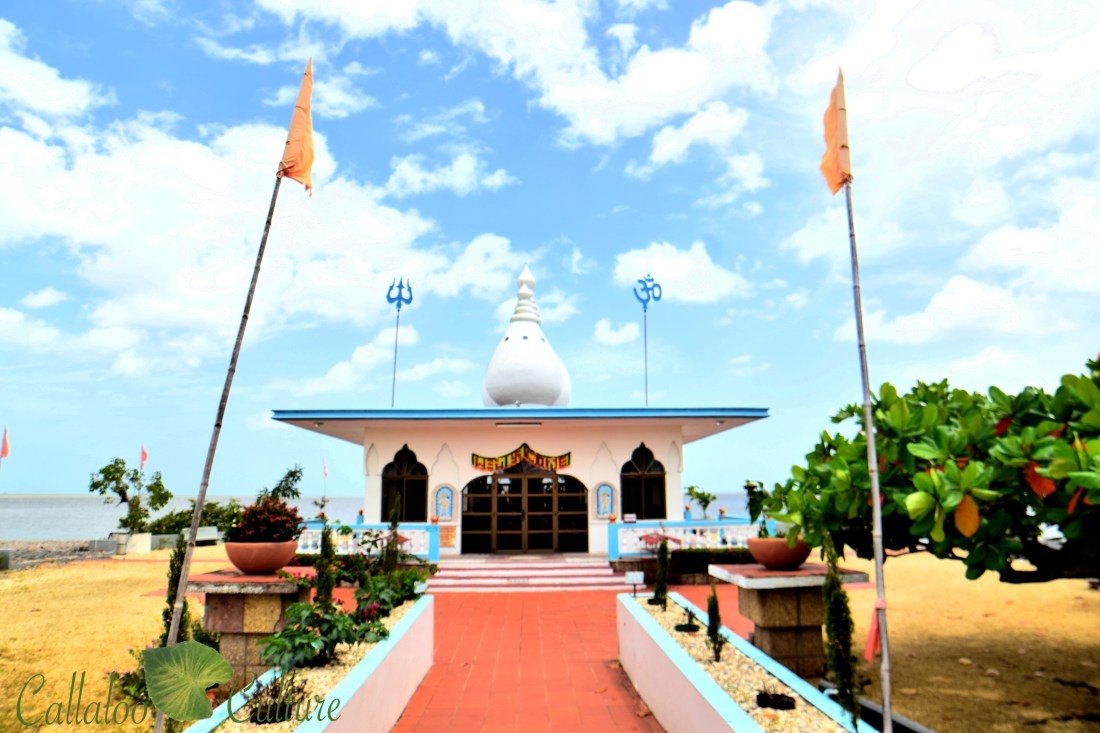
This is the Story of Sewdass Sadhu, the man who originally built Temple in the Sea, Waterloo Trinidad.
My friends and I made the Journey down to Waterloo where the existing structure that was re built by Randolph Rampersad now stands. In true Trini style, we did not make an appointment so the temple was closed. Luckily, Teddy Bruce, the father of one of my closest friends has extensive knowledge on the history of the Temple. Mr. Bruce has plans to produce a detailed documentary on the accomplishments of Sewdass Sadhu so he was the perfect person to interview outside of the Sewdass family.
Sewdass Sadhu was born in 1903 in the Holy Village of Varanasi (Benares) in India. At the time of his birth, India was faced with oppression under the British rule. Things were tough for the natives, their way of life was already compromised by the British invasion and the failure of the summer monsoons over west and central India caused widespread drought and famine between 1899 -1900.
After slavery was abolished in many British Colonies the option of Indentureship was introduced. This offered the people of India the chance to migrate with the promise of “fair work for fair wages”. Did the British hold true to this? That is very much up for debate. Many families in India took the bait in hopes of leading a better life. At the tender age of six, Sewdass, his parents and his two younger brothers left the Holy Village, everyone and everything they knew for Calcutta to board a ship to transport them to a land unknown.
On the 4th of June 1907 Sewdass and his family boarded the S. S Mutlan in Calcutta. The ship took the route from the port in Calcutta through the Indian Ocean and The Cape of Good Hope. They would also travel through the remote Port of St Helena in Britain, the Atlantic Ocean and then the Caribbean Sea.

The voyage lasted three months. It was a gruelling expedition and the substandard accommodations on-board the vessel made travel even more complicated. Sadly not all the passengers survived the journey to the promise land. Rough seas, the extreme heat and communicable illness claimed the lives of eleven passengers.
Many of them, who had never left their villages, never saw the vast wide ocean. This wonder quickly turned into a sign of morbidity as it would become the final resting place for those eleven lost lives as their bodies were thrown overboard.
The survival of Sewdass and his younger brothers during this crossing was nothing short of a miracle. In times of uncertainty Sewdass would see his parents in constant prayer. They encouraged their children to do the same. It was their family bond and trust in God that facilitated their safe arrival to Trinidad.

The S. S Mutlah reached it’s destination on the 4th of September 1907. The passengers disembarked on Nelson Island, west of the main land.
Although the surviving passengers were extremely fatigued from their tedious passage, they were subjected to a rigorous inspection. Immigration officials fumigated the passengers and their belongings. This was to ensure that no illness were passed on to the current populace of the island.
When the new immigrants regained their strength, they were given a number, a contract to sign for five years and they were assigned to a village to work.
Sewdass and his family were assigned to the village of Barrancore, which is known today as Brickfield. This village, is located in the central part of the island is close to the shores of the sea. Barrancore, at the time was also occupied by freed African slaves.
Sewdass toiled on the “Waterloo Estate” alongside his family. Many years passed, although he had very little Sewdass would return to India on many occasions to attend pilgrimages. On one voyage back to India the ship he was on board almost sank in the midst of a storm. Upon his arrival to India he related this near death incident to a Pundit, who advised him that he should build a Temple as a sign of gratitude to God. Sewdass decided that since the Gulf of Paria reminded him of the Ganges in his home town, the Mandir would be build there on his return.
Sewdass returned to Trinidad with a mission. He built his temple in the swamp lands that belonged to The British Sugar Company Tate and Lye. The land was not being utilized after all so why not?
For five years the temple was used by the members of the Hindu community in Waterloo and environs for Pujas and various ceremonies
In 1947 when Tate and Lye became aware that their property housed a temple they demanded that the structure be demolished. Sewdass refused. Tate and Lye sent officials to demolish the Temple. If that was not heart wrenching enough, Sewdass was arrested and imprisoned by the British Police for fourteen days and was charged five hundred pounds.
This is where things get interesting.
Sewdass came to the conclusion that the sea belong to no one, therefore he would build his temple in the sea.
With a new mandate, Sewdass purchased a truck. He filled the truck with dirt and other materials and started backfilling the sea in 1948. Sewdass made great strides in his project until one day the unthinkable happened. The sea, not willing to be tamed, rushed in, flooded the truck and the reclaimed land.
Sewdass would not be defeated or deterred. He managed to backfill the ocean about ¼ mile using a bicycle and two buckets. Yip you read correctly. This took Sewdass 17 years to complete (backfilling a structure of temple). The original structure comprised of the temple, a rest room and a kitchen.
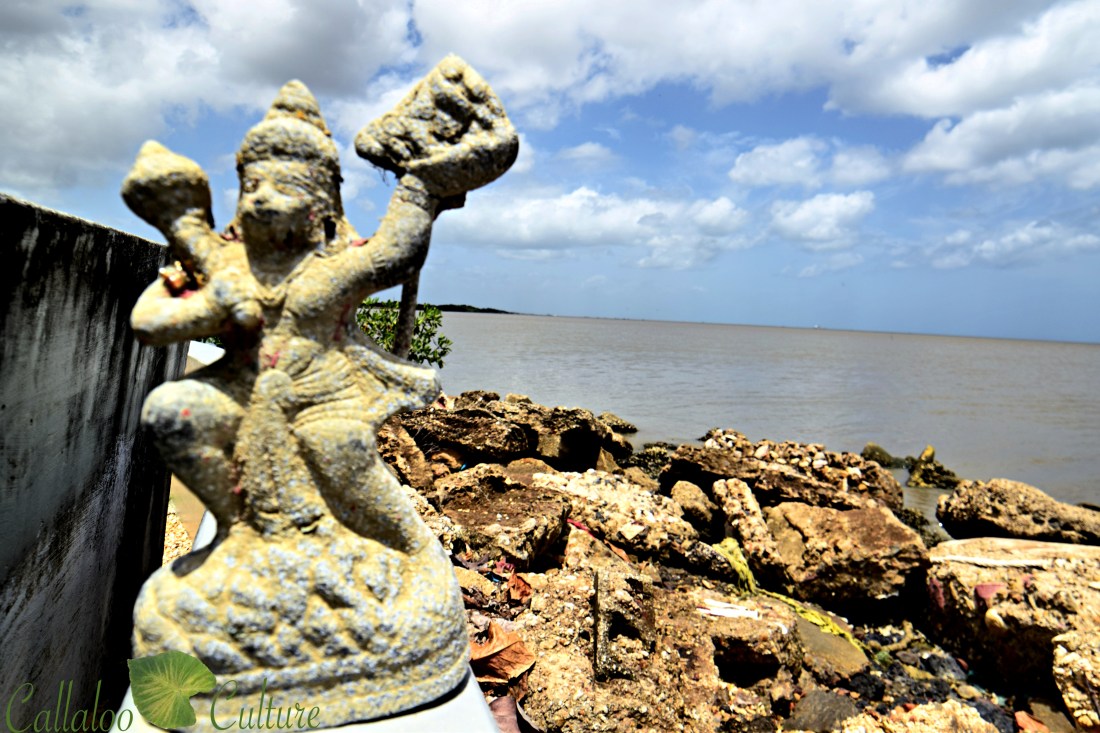
Many people utilized the temple, a symbol of love, dedication and devotion until the death of Sewdass in 1970. Sadly, after his passing the temple, his legacy was neglected and eventually succumbed to the erosion of the sea.
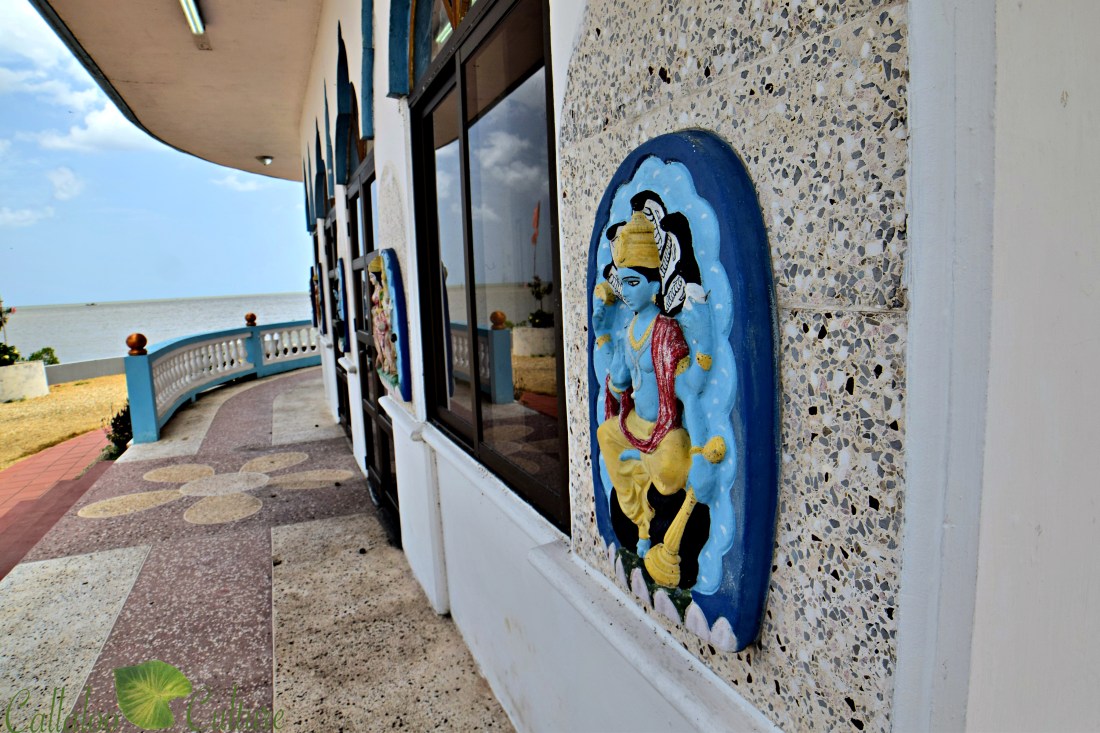
In 1994 a group of local businessmen and the Government of Trinidad and Tobago rallied together in an effort to rebuild the temple. The new structure, which stands in memory of one man and his dream, was completed in 1995.
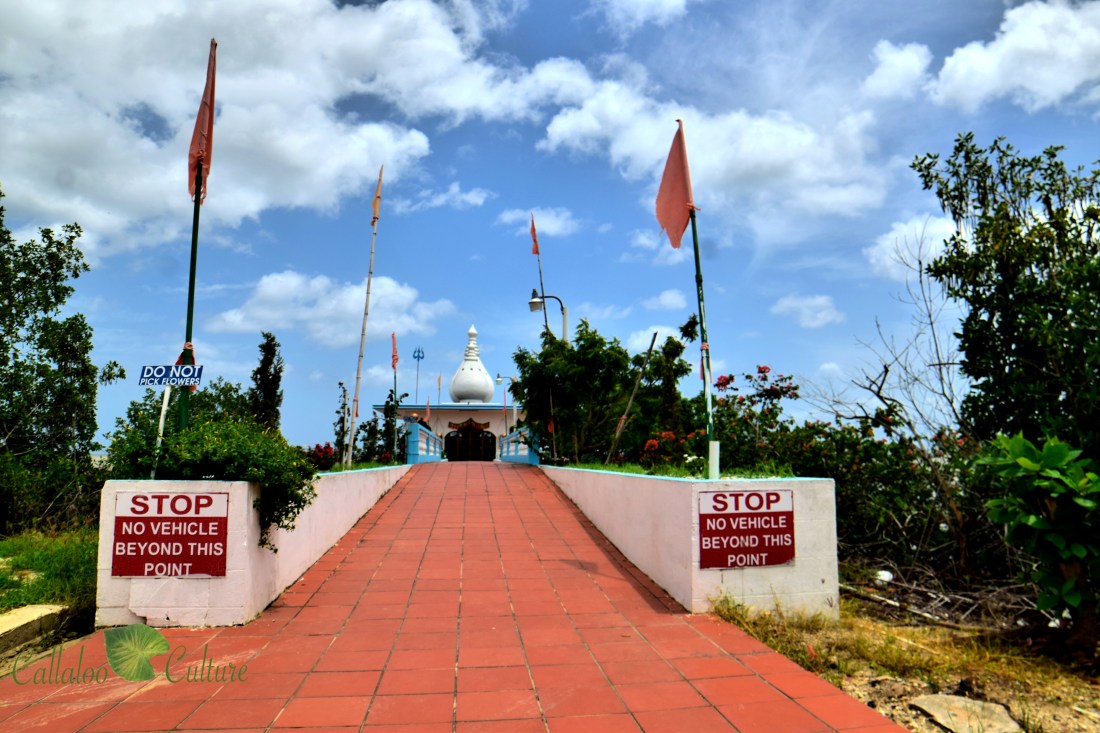
The stroll from the car park, down the walk way to the actual temple is nothing but breath taking. The sea is visible on either side of you. The beautiful foliage that line the walk – way make the temple even more inviting. I was in amazement as I made my way along the path knowing that this concept of a temple in the sea was born from one man’s vision and labour. At the end of the walkway if you look to your right, you can see the outline of the northern range and the buildings of Port of Spain across the water. If you look even closer you will be able to see NAPA (National Academy of Performing Arts) glistening in the rays of the sun.
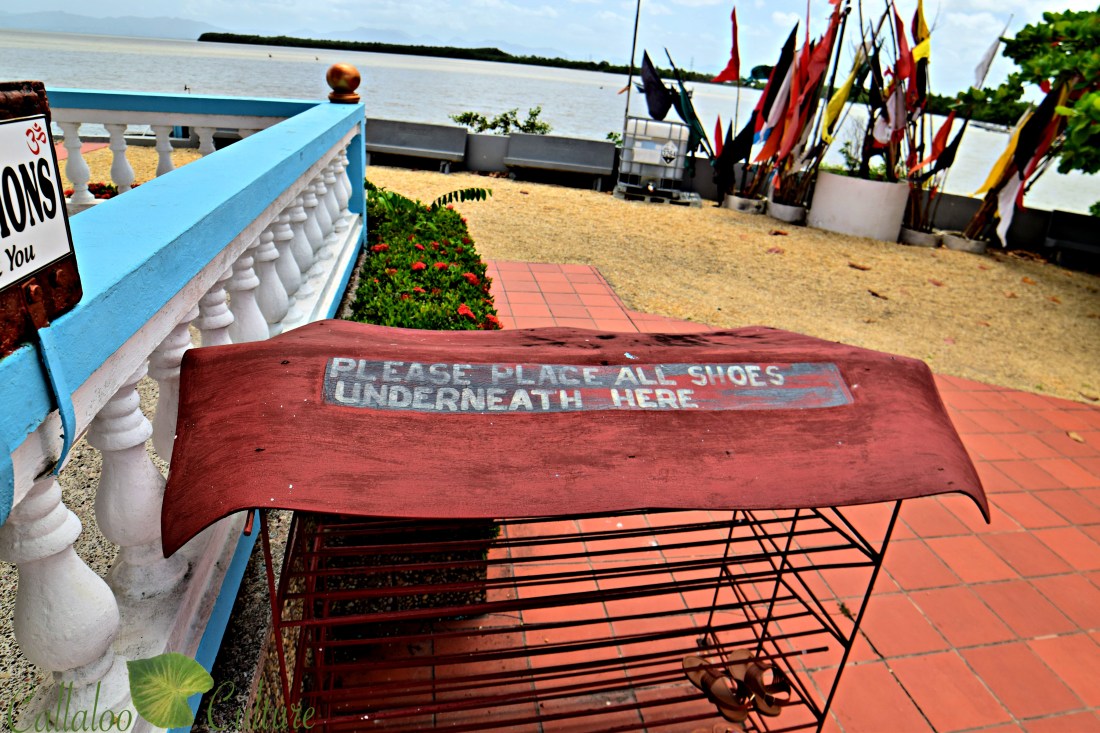
At the time of our visit, as I stated previously, there was nothing happening so the temple was closed. We were still able to wonder around the grounds without any interjection or interference; it was after all built for God and by extension the people.
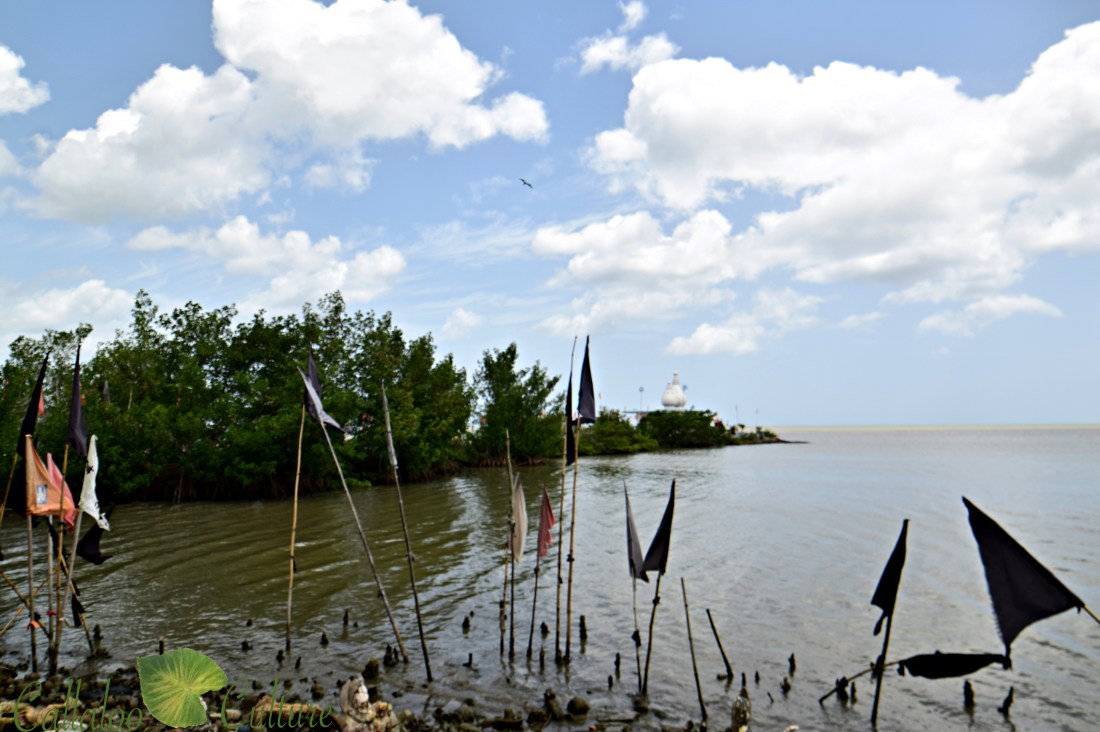
Although I originally visited the temple for research purposes I was able to get in some prayer in and hold a small meditation. I believe this is because of the location of the temple and the fact that it is so peaceful. No, seriously, it really is.
If you have never visited this site as a local you should definitely add this to the list of places you MUST Visit! Religion and beliefs aside it is amazing to see what the human mind can accomplish once he or she stets their mind to it.
If you are going to visit the temple I would advise the following;
- Dress respectfully, it is after all a place of worship that means NO tight clothing, No shorts and cover your shoulders.
- Respect the rules of the temple.
- TSTT said call first. This is for a reason. You don’t want to arrive there and be disappointed. (868) 681-4435
Sewdass story should be a lesson to ALL of us. The next time you face a challenge and you think that you cannot get through it, remember Sewdass, his two buckets and his bicycle.
Blessings
A special thank you to:
Narine Sewdass for allowing me to tell his father’s story
Teddy Bruce for sharing his information
Categories: Uncategorized
 callalooculture.com
If you ate not a fan of callalooculture become one today.. This blog is not only interesting but full of information that you may or not be aware of or there is information to add to your knowledge.. The author of this blog writes with passion of our beloved country..
LikeLiked by 1 person
Thank you
LikeLike
Beautiful……
..Trinidad and Tobago is rich in history. Thank you for reminding us that our ancestors didn’t sit and wait for things to happen they got up and fought for everything.
LikeLike