
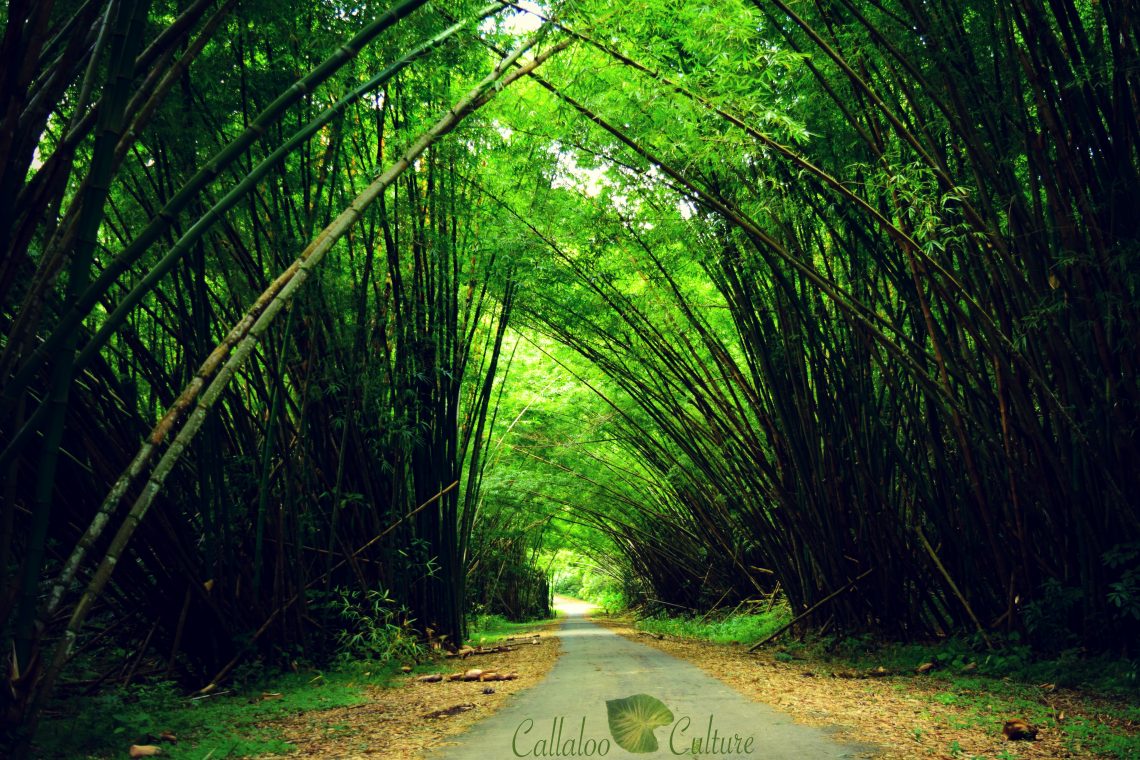

I know, I know.
It’s been a while since I posted one of these, but as we all know life happens. Having a day job and working towards your degree ain’t easy. Some of you can identify with my struggle. Since work is out of the picture temporarily and school is on break, I decided that there was no better time to get this going. I’ll try my best to roll out some frequent material and you can hold me to that. Seriously! Hold me to it!
No better place to start but in my backyard!
I mentioned in previous blogs about my fascination for larger than life objects. As a child I loved visiting this site. I would stare at the wheel and imagine it slowly spinning. I could hear the loud squeaky noise the wheel would make as it slowly turned. I tried to envision the water pushing the wheel into action and I somehow wished that someone would fix it so that I could could witness this relic at work.
As a child of course I had no idea what this monument really represented. It is a reminder of a time when Trinidad was ruled by its colonial masters, slavery was a way of life for the African population and Sugar and Cacao were King.

Water Wheel at River Estate Diego Martin
Diamond Vale in Diego Martin is known to our generation as a housing development. Before Dr. Eric Williams decided to transform that area into a residential space, long before we gained independence as a country, this territory was home to the largest and the most prestigious sugar plantation in Trinidad. It was called Diamond Estate.
The Diamond Estate, had its own water wheel which was built in 1810 from cast iron. The weight of the water from a nearby river was used to power the wheel, which crushed the sugar cane. The juice from the cane would then flow through pipes or flumes to vats in the nearby factory. Later when, there was a decline in the sugar industry the wheel was used to crush cacao seeds.
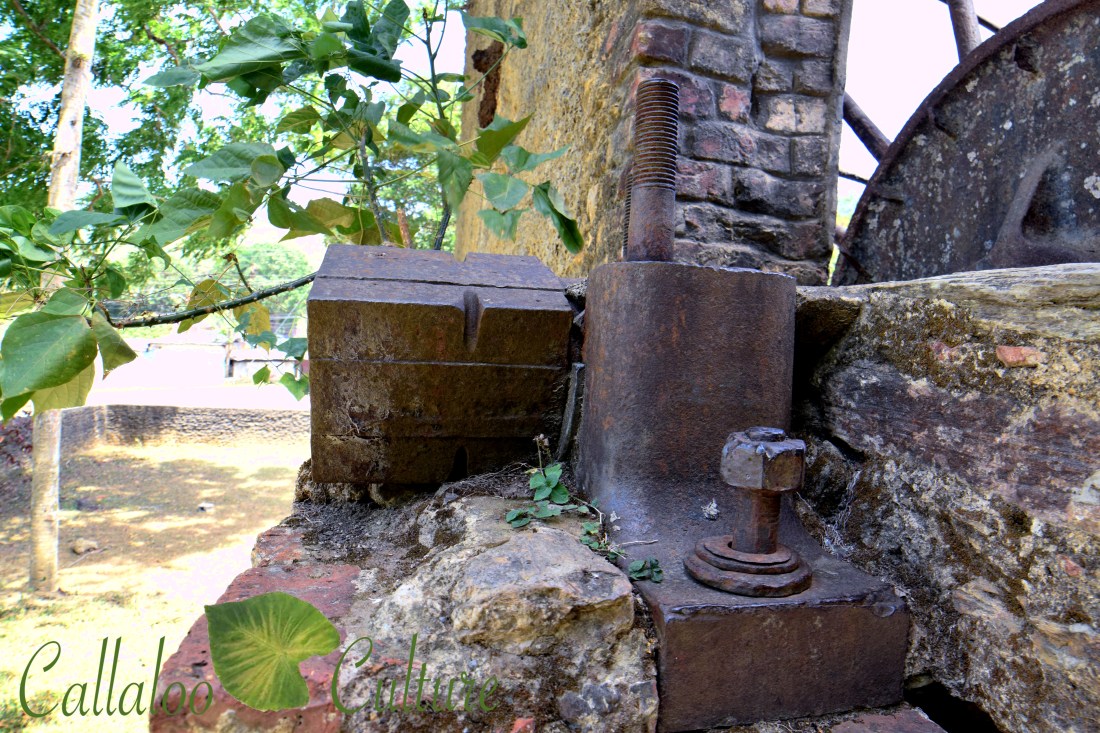
The mechanisms that aided the water wheel function
The last land owner of this estate was Nicholas Brunton. It is said that when he died the estate was closed. This artefact is the last standing water wheel in Trinidad.
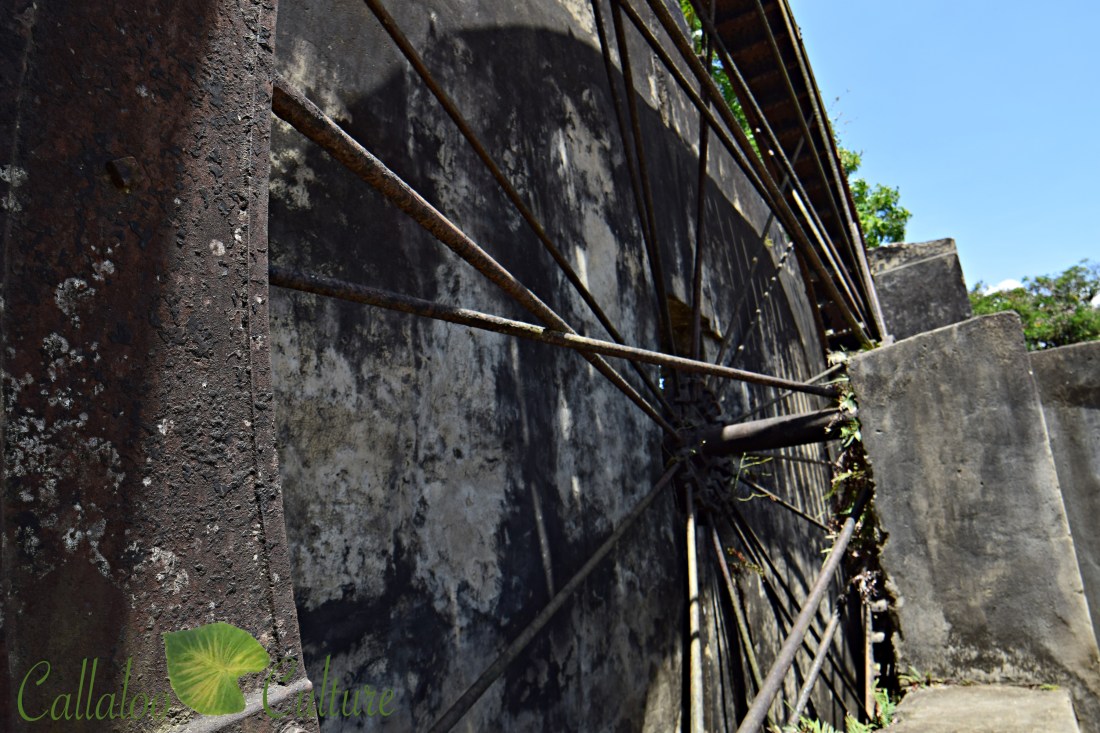
My friend Kanika and I made the trek to the water wheel last week, thankful we had good weather which was great for taking photos . This was her first visit to the heritage site.
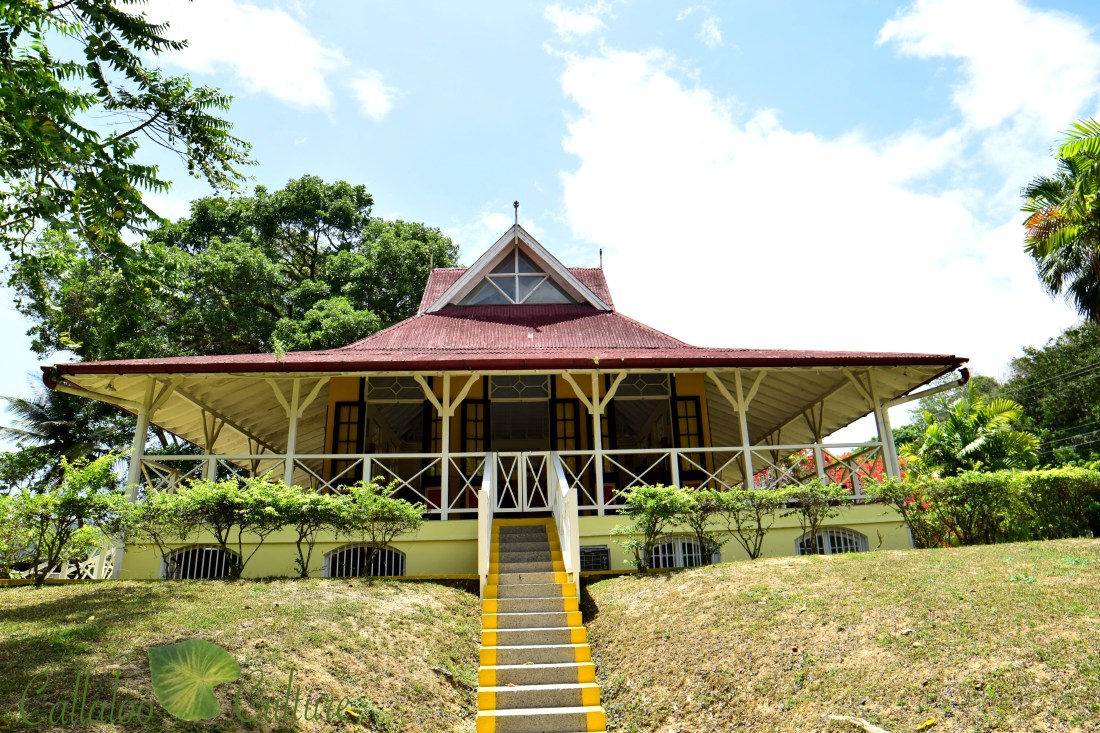
Water Wheel Museum, River Estate Diego Martin
Across the road from the water wheel is the museum which was originally used as a banquet hall in the 1800’s . The museum is usually opened to the public Monday to Friday 10 am – 4 PM (opening times may vary) .
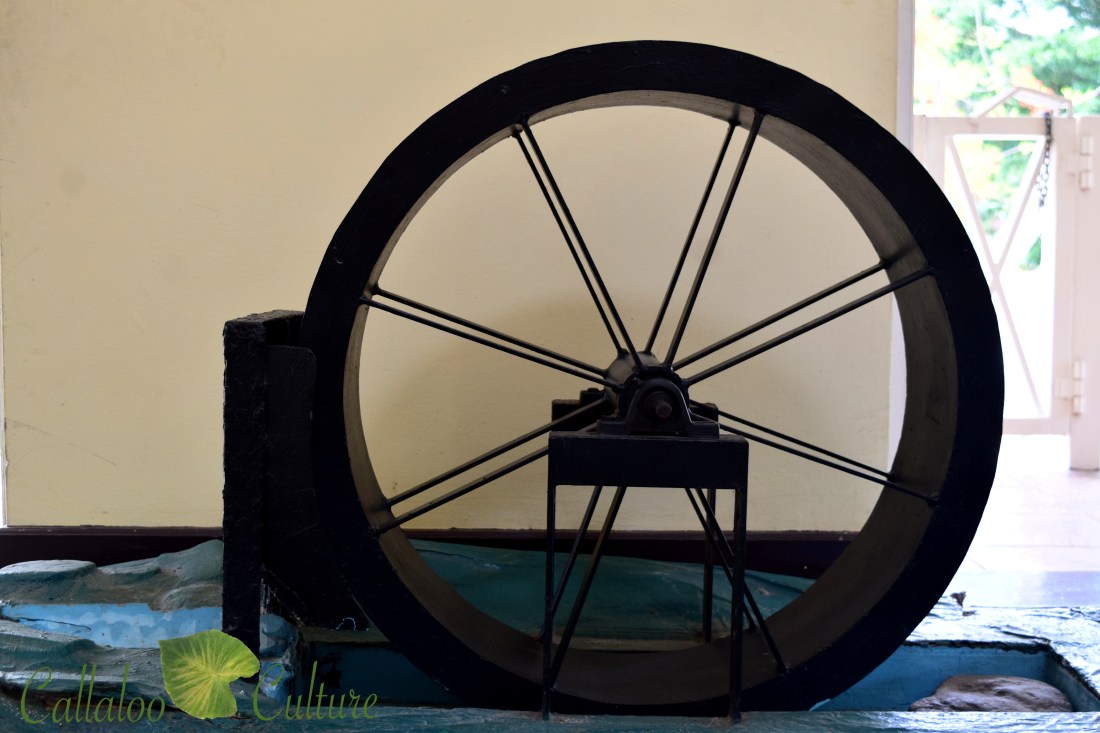
Replica Of The Water Wheel At The Museum Which No Longer Functions
The Museum is home to the artefacts related to the water wheel and the Cacao estate. There are many photographs of what was the Diamond Estate and the Cacao fields which were located in River Estate.
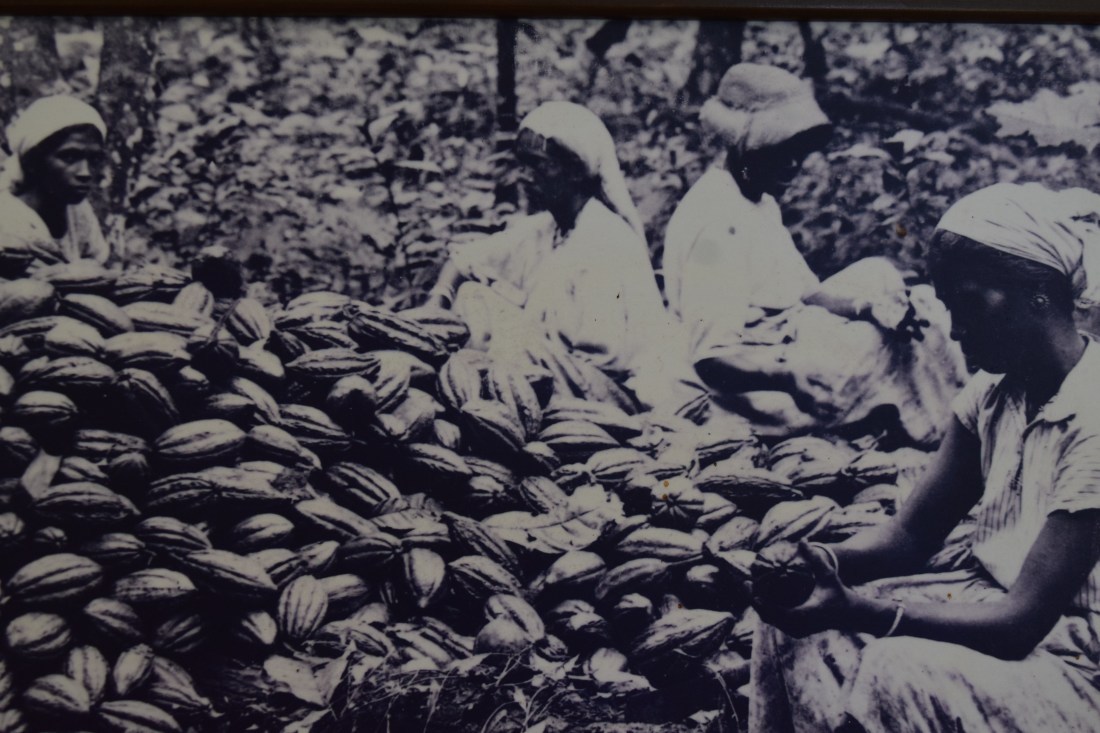
Photo OF The Cacao Estate River Estate Diego Martin
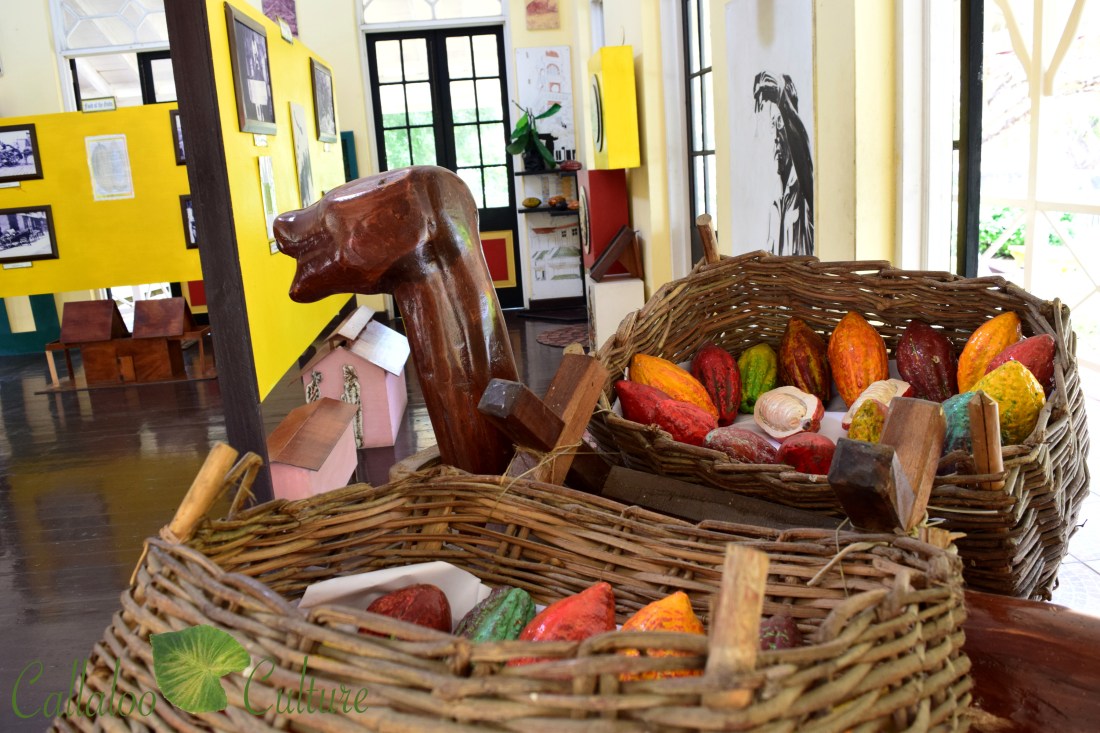
Figurine Of A Donkey Carrying Caskets Of Cacao Inside Of The Museum
I have not visited the museum in years and I must say that both Kanika and I were disappointed upon our visit.
Although you may not be able to tell based on the photographs, the building requires serious maintenance. Unlike the the museum at the Pitch Lake, which was featured in my previous blog The Road to El Dorado Paved in Asphalt. this museum lacked love and attention from the government. There were no tour guides to give information on the water wheel or the estate, nor did they have any brochures available in leu of guides. Only a singe security guard who assisted us in whatever little way that she could. I remembered in my youth there was an audio visual room which was located beneath the museum that showed informational films on the water wheel and its operation. Sadly this room no longer exists as the room has now been converted to a staff room which floods when it rains. This cannot do! This is no way to treat one of the “gems” of Diego Martin. This is supposed to be a tourist site and it is in no way tourist friendly.
The only way we can move forward as a people is if we remember our past. Part of our past is slowly fading away and would diminish if we are not careful. I am hoping that this blog is read by someone in authority who would be willing to preserve this site before it becomes a rusty eyesore of our colonial past.
Blessings
Callaloo Culture
Categories: Uncategorized
 callalooculture.com
As always your article makes an excellent reading. But for the length of time you had me waiting for this reading it should be longer my heart was saddened because it ended too soon. Nevertheless excellent work… informative reading. and as also keep your head up and continue writing.
@callalooculture
LikeLike
Thank you.
LikeLike
Thank you for writing this – especially the addition of pictures. I stumbled across your page as I learn about Nicholas Brunton, my great great great I don’t know yet, but suffice to say he’s an ancestor of mine. Sad to hear about the current condition of the estate and I hope one day to visit. I am grateful to be able to read about it and see a little through your post – thank you!
LikeLike