

You can’t beat being a Trini!
Our rich history, cultural backgrounds and our various ethnic groups packed into one small island are some of the things I love about being a Trinidadian. As I mentioned in my previous blog Love|Passion|Dedication In Memory of Hussain & Hassan I appreciate that what we lack in geographical space, we make up for in vibrancy. I like the fact that we are also a tolerant people. Each ethnic group has knowledge about the other’s customs and traditions which are usually respected. I remember speaking to someone who is an American with absolutely no Caribbean roots. I mentioned that the next day was Diwali therefore it was a holiday in Trinidad. She had no clue what Diwali was I was so stunned, I did not even know how to begin to explain. I know that Diwali is not a recognized holiday in the USA but the fact that she did not even know what it was says a lot. I can’t blame her at the end of the day, she has no Caribbean friends and she does not know anyone from India. Back to my original point you can’t beat being a Trini and by extension a member of the Caribbean diaspora. Because of our history and the many people who settled here and of course the intermingling of the population, it gives us the edge over many “First World” countries.
In this aspect, our tolerance for our fellow man’s religious beliefs falls into the same category. Raised as a Pentecostal, I have attended Catholic primary and secondary schools I have participated in many Catholic rituals and prayers with no issue. I have attended a Muslim wedding, a Baptist thanksgiving and I have prayed in Hindu Temple. Nope I am not confused; I just understand that we all serve one God. But that is a topic for another time, I digress. Because of how our communities are or should I say once were closely knit, attending a ceremony that is outside of your religious belief is hard to avoid.
This Blog however is NOT about religion, but about the structures used to facilitate the praises of the devotees to their God.
I was always drawn to the architecture of our older Churches, Temples and Mosques and this blog was the perfect catalyst to photograph and feature some of the places of worship in Trinidad.
The Cathedral Basilica of the Immaculate Conception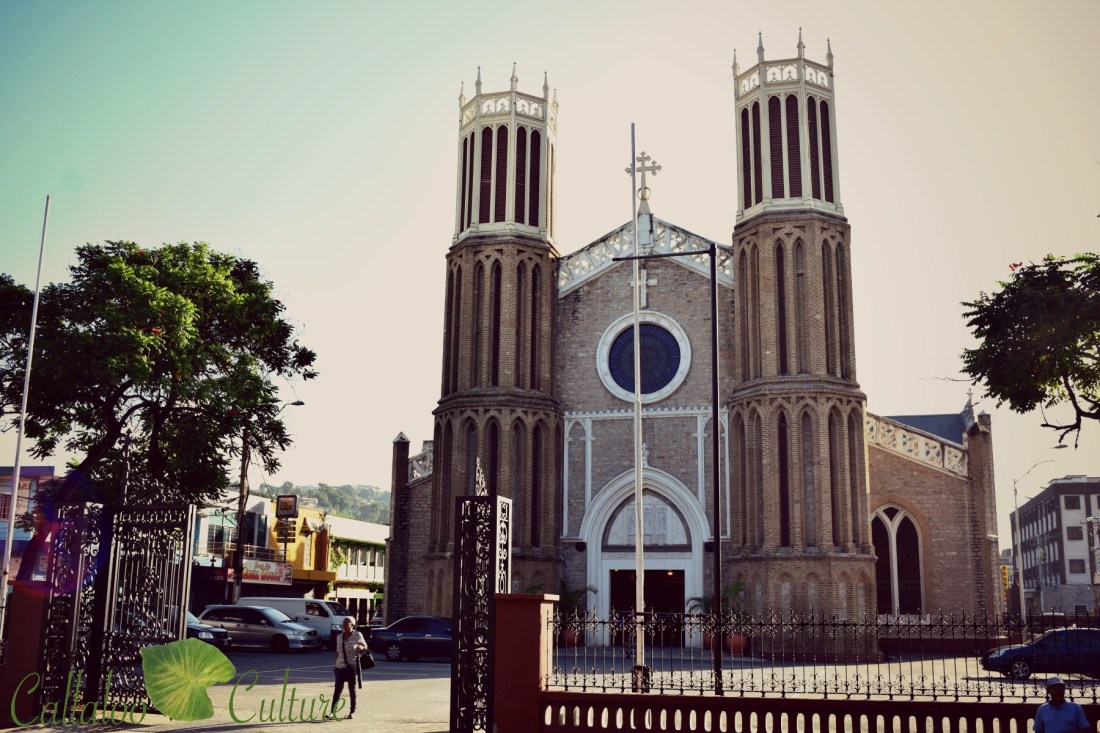
If the name threw you off I am sure the photo would have helped you find your bearings. Tamarind Square was the home of the first Catholic Church in 1781. This was built by the Spanish Governor Martin De Salaverria. When the British took charge of Trinidad, English Governor Sir Ralph Woodford, wanted to build a church better suited to accommodate the growing Catholic population. After approvals were granted the foundation stone was laid on the 24th March 1816. The new structure was built west of the existing church and at the eastern end of Marine (Independence Square). Vicar Apostolic to the Holy See, Doctor James Buckley arrived in Trinidad in March 1820 and the church became a Cathedral. In 1832 the Cathedral was completed and consecrated in 1849 after all debts incurred in its building had been paid. Pope Pius IX, in 1851 declared that the Cathedral was to rank as a Minor Basilica. (MacLean, Cathedral of the Immaculate Conception). Like most of the historical churches/places of worship this Cathedral is kept in an excellent condition. After being closed for some years for renovation, the Cathedral has reopened its doors. The work done on the Cathedral is quite noticeable, however the décor has not changed and that to me is the best part. My love for Catholic Churches started in primary school. They are so beautiful, from the stained glasses, to the statues and the arching of the wood in the ceiling. I am obsessed with the idea of getting married in an antique Catholic Church; I don’t know how that is going to be possible because I am not Catholic.
The Hanuman Murti
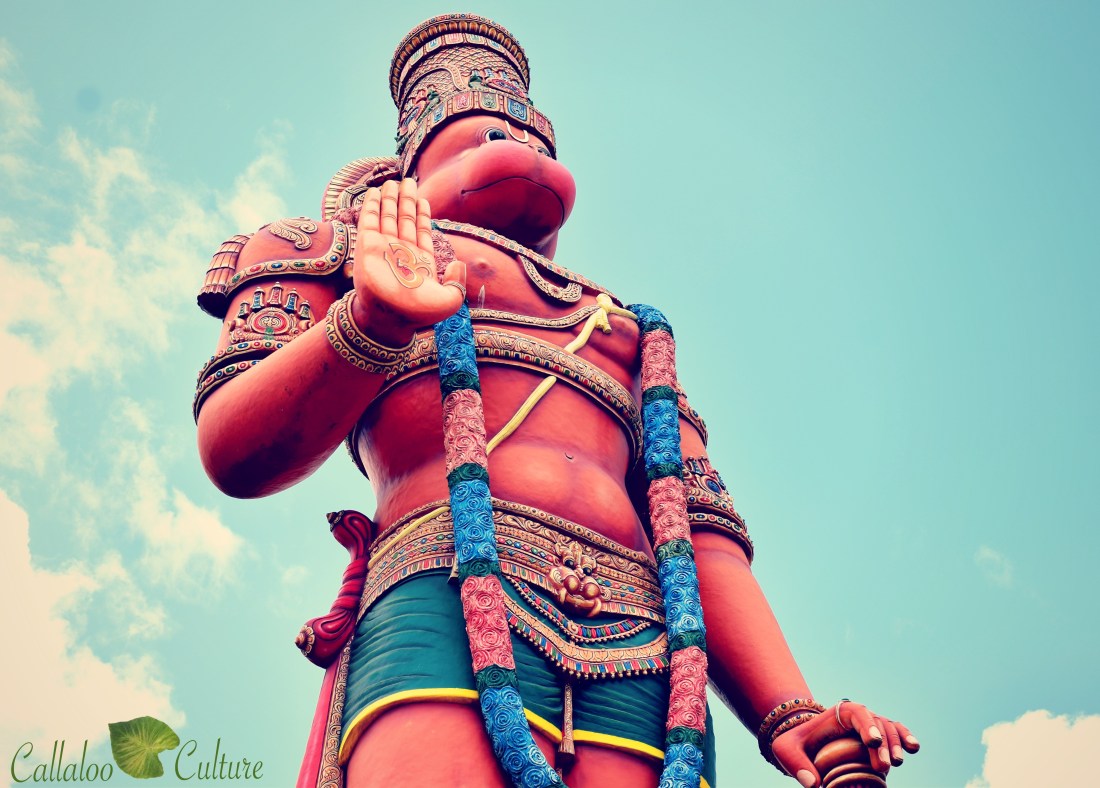
Now I don’t know what my obsession is with larger than life structures, but the Hanuman Murti was one of the religious sites I was anxious to visit. When my classmate Elijah and I made the trek down to Carapichaima I was ecstatic when I saw the statue from miles away. I shouted “Oh my God, there it is!” much to the amusement of Elijah. We had to remove our shoes in order to enter the grounds, which is a common practice in Temples and Mosques. We were greeted at the gates by a pundit who was happy to facilitate us. He invited us to explore the grounds and he happily answered any questions we had. There is a water course that runs around the murti that adds to the aesthetic of the grounds. There is also a spiritual meaning which I was too excited to retain (my apologies). The statue, which is dedicated to Hindu god, Lord Hanuman stands at 85 feet. It was built according to the Dravidian style of architecture of south India and it is the largest Hanuman Murti to exist outside of India. The magnificence of the statue is a reminder to all devotees that they should grow in height spiritually (85FT Hanuman Murti, 2017). Now, I was raised Christian, but as an adult I have become much more open and free thinking. I do not believe in religion but spirituality. The Hanuman Murti is one of the places in Trinidad that I felt at peace. If you have not visited this wonder you should definitely plan a trip to see it.
Haji Gokool Meah

This Mosque stands at the beginning of the Western Main Road. It is indeed one of the most popular land marks in St James. I attended Newtown Girls RC, so every day on my commute to school I would pass in front of this Mosque and wonder what the interior looked like. I have always admired the architecture old Mosques. The origin of Islam can be traced back to the 7th century Saudi Arabia (Religon , 2002). I love that the design of the local Mosques mirrors the basic design of the Mosques in the Middle East. The first masjids built in Trinidad were meek structures of wood, tapia and thatch. Approximately 20,000 Muslims migrated to Trinidad under the indentureship programme . In the 1920’s some members of the faith who were prosperous erected masjids which were in keeping with their elevated economic status. The most notable member who contributed to the development of the building of the Mosques was Haji Gokool. Haji story is one we can all learn from after arriving on the island in the mid-1800s he was left orphaned when his mother died. He became a laborer on an estate near San Fernando where he saved and purchased a mule cart and later branched off into shop keeping. In 1927 Gokool started construction on this Mosque after he purchased the lands of the old Peru Estate in Coolie Town (now St James). (Bissessarsingh, 2014)
Holy Trinity Cathedral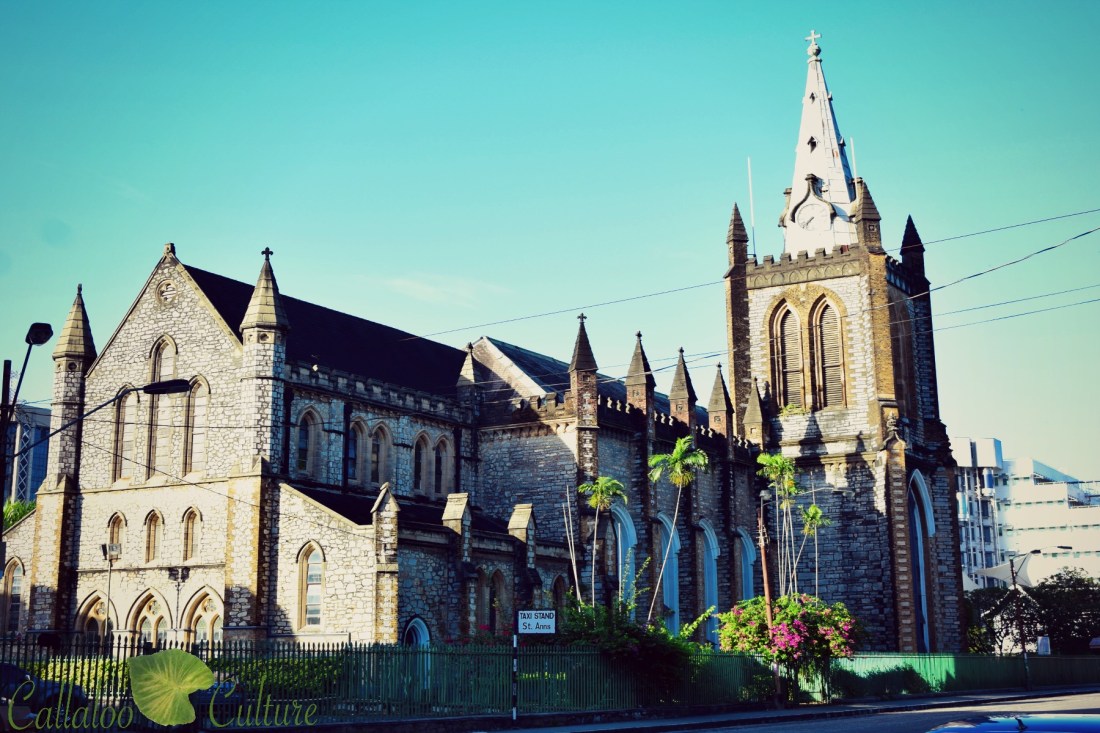
The Holy Trinity Cathedral was the first Anglican Church to be built in Trinidad in 1801. In 1808 the church was destroyed by fire. After attempts to replace the church were futile, as construction of the church started in the middle of Woodford Square. There was a public outcry and Governor Sir Ralph Woodford joined in the condemnation to pull it down. (MacLean, n.d.) The present structure was rebuilt and consecrated on Trinity Sunday in 1823. (The Anglican Church in the Diocese of Trinidad and Tobago , 2017). I visited this historical site once when a friend of mine got married. Having attended a Catholic school, the interior of the Anglican Church looked almost identical. But then again, so is the religion but that is another blog for another time.
Sri Dattatreya Yoga Centre
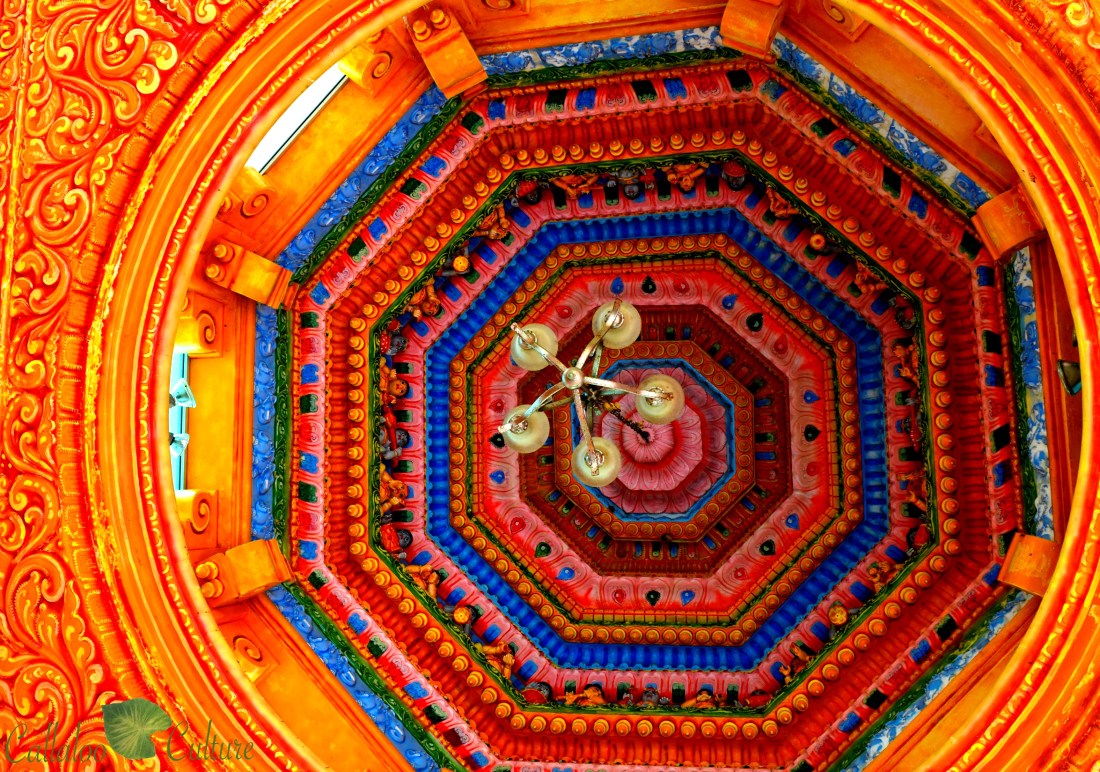
The Sri Dattatreya Yoga Centre is a stone’s throw away from the Hanuman Murti. Tales of its beauty reached my ears so I convinced Elijah to take the walk next door. Let me assure you this Temple is beyond beautiful. From the exterior design of the Temple, to the vibrant colours used and the hand made murtis. Yip, that’s what I said HAND MADE. We were told by the pundit that all the material was imported from India. Laborers from India as well as Trinidad built the Temple and all the trimmings. All the statues, the small murtis were caved by hand. You have to see this place. Photography is not allowed inside of the Temple, but I can assure you, the interior does not disappoint it is just as majestic as the exterior.
Some of the places of worship that I have mentioned may already be familiar to you. If you ever decide to visit any of these please remember to be courteous, ask questions and mind your attire. Stay tuned for part two. If there are any Churches/Temples/Mosques that you would like to see on the blog, be sure to leave a comment.
Blessings
Callaloo Culture
Bibliography
85FT Hanuman Murti. (2017). Retrieved from Destination Trinidad and Tobago : https://www.destinationtnt.com/hanuman-statue/
Bissessarsingh, A. (2014, July 27). The mosques of Port-of-Spain. Retrieved from Guardian Trinidad and Tobago : http://www.guardian.co.tt/lifestyle/2014-07-27/mosques-port-spain
MacLean, G. (n.d.). Cathedral of the Immaculate Conception. Retrieved from Citizens For Conservation Trinidad & Tobago: http://citizensforconservationtt.org/main/index.php/builtherit/powbuilt/97-cathedral-of-the-immaculate-conception
MacLean, G. (n.d.). Holy Trinity Anglican Cathedral . Retrieved from Citizens for Conservation Trinidad and Tobago : http://citizensforconservationtt.org/main/index.php/builtherit/powbuilt/96-holy-trinity-anglican-cathedral
Religon . (2002). Retrieved from Origin Of Islam: https://www.allaboutreligion.org/origin-of-islam.htm
The Anglican Church in the Diocese of Trinidad and Tobago . (2017). Retrieved from History of the Diocese of Trinidad and Tobago : http://theanglicanchurchtt.com/home-page/history/
Categories: Uncategorized
 callalooculture.com
Greetings Callaloo Culture! I enjoyed your display of our multicultural society. My belief is similar to yours in that we all worship one God but in different methods.
LikeLike
Thank you Stephanie
LikeLike