


I am a Trinidadian who doesn’t fancy excursions!
Yes I said it.
Growing up, my mother NEVER encouraged the excursion vibe. Outings with family and friends were done yes, but not the traditional “excursion” culture that I grew up seeing as a child, where random people would meet at a location and board the same maxi or “excursion bus” blaring music. That was simply not done in my household.
Now, don’t get me wrong, as an adult, if the excursion involves people I am acquainted with and not random people, I’ll indulge.
This particular outing was organized by the Facebook Group Ask Phonics. As I am familiar with the people in this group, I felt comfortable making the trek to the end of the island with them. Also, this was a children friendly outing which made it even better. We chose to drive and not be apart of the “maxi vibe” which was okay, we still felt like we were apart of the lime.
We left home early Saturday Morning to meet the group in Grand Bazzar. From here we would begin our journey to Los Iros, to see one of the many mud volcanos in Trinidad. Los Iros, is located at the southern edge of the island. For those of you who do not cross the light house often, before you gasp and clutch your pearls, relax it really isn’t that far.

We ventured straight down the highway which takes you to the south land. The highway ends in Penal so from there we drove through Siparia. After Siparia heading further south, it is literally one straight road to Los Iros. The weather was really good that day so the ride down to the south land was a pleasant one. When we arrived at the entrance to the main beach, we took a left. This is where the real adventure began. Our assent to the volcano was an interesting one. We drove along a half paved half dirt road up the hill. Because the road was so narrow there was no place for us to stop, so I could not take pictures but let me tell you the view of the sea below is to die for! There was the ocean, in two different shades of blue glistening under the rays of the sun as far as the eyes can see. It is so totally worth the bumpy ride up!!!! We continued our journey for a few more minutes, until we stopped near a track.
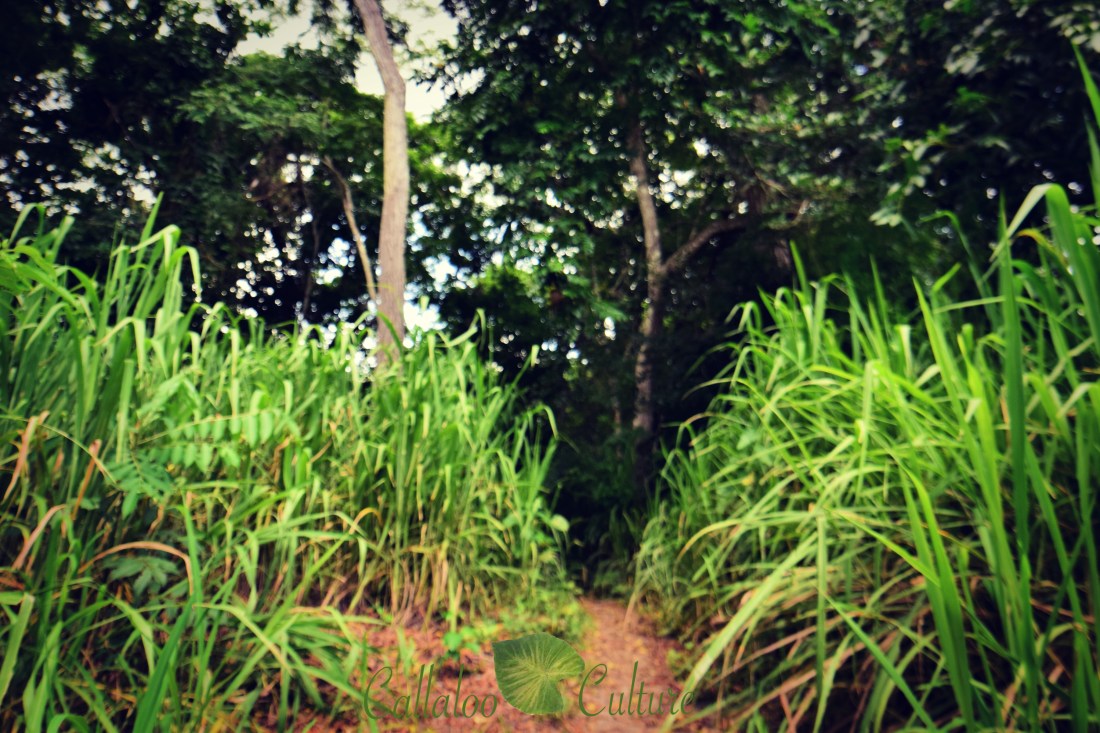
The trek continued on foot at this point as we made our way through some trees to the mud volcano. Now, it’s a short walk from the road to the volcano, like less than two, minutes but make no mistake you are well aware that you are in the bush. From the fluttering of wings over head to the rustling of the bushes at your feet. On the short walk to the volcano, we came across a mini sulfur spring, which was located directly in front of a tree. I’m trying to figure out what’s going to happen to that tree if the spring gets bigger? If there are any geologist reading this blog kindly let me know in the comments.
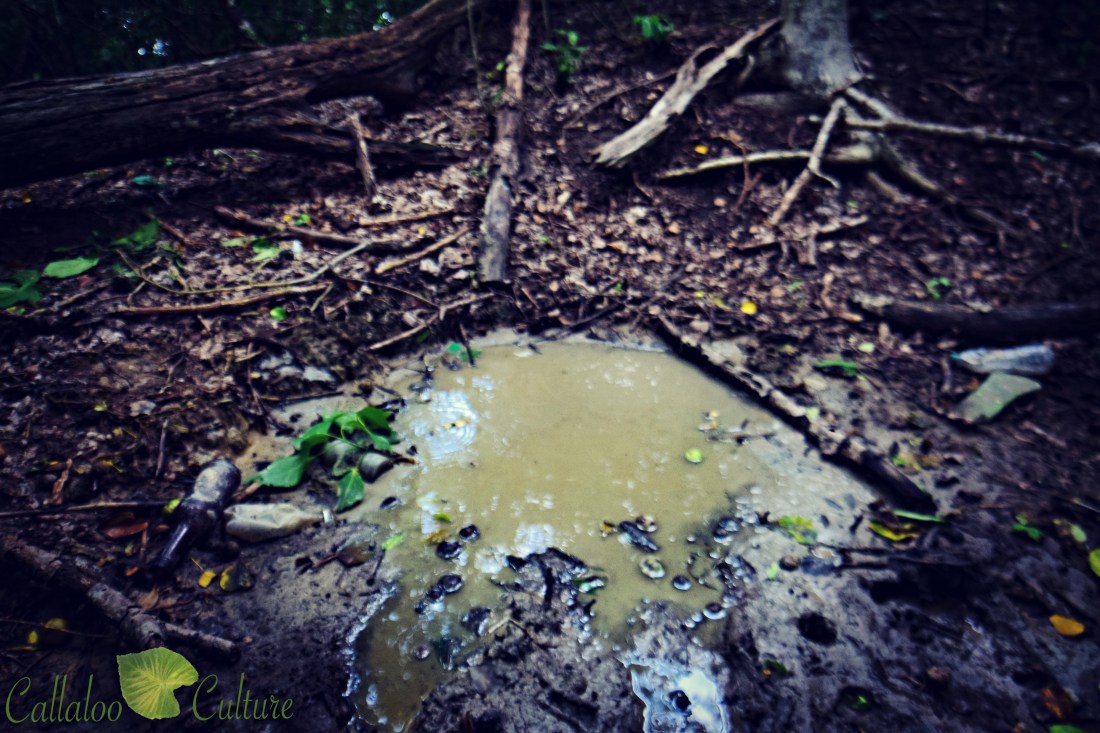
A few steps away from this tree would take you to a clearing, which makes you feel like you are in the middle of nowhere, here is where the mud volcano lies.
There are many mud volcanoes in Trinidad, I grew up hearing about the Devils’ Woodyard in Hindustan Princess Town. Keep in mind that the internet was not really a thing back then, information was limited to what you saw in the magazines, TV or newspapers.
The second volcano shot into the spot light (literally) in 1997.
The eruption of the Piparo mud volcano spewed warm mud 200 feet into the air. The mud covered an area of 2.5 kilometers. This caused the displacement of 31 families, as mud as rock, like a tidal wave, quickly invaded their homes.
Technically mud volcanoes are not true indigenous volcanoes as they do not produce lava and they are not driven by magmatic activity. A mud volcano or “mud dome” is a land form which is created by the eruption of mud of slurries (water gasses). These mud domes come in various sizes and can range from 1 or 2 meters in height and 1 or 2 meters wide to 700 meters high and 10 kilometers wide. The mud inside of the volcano is produced when water heated below the earth’s surface blends with subterranean mineral deposits, thus creating the mud slurry exudate. This mineral is then forced upwards through a geological fault or fissure due to temperature.
86 percent of the gas released from these volcanoes is methane, with much less carbon dioxide and nitrogen emitted. Ejected materials are most often a slurry of fine solids suspended in water that may contain a mixture of salts, acids and various hydrocarbons.
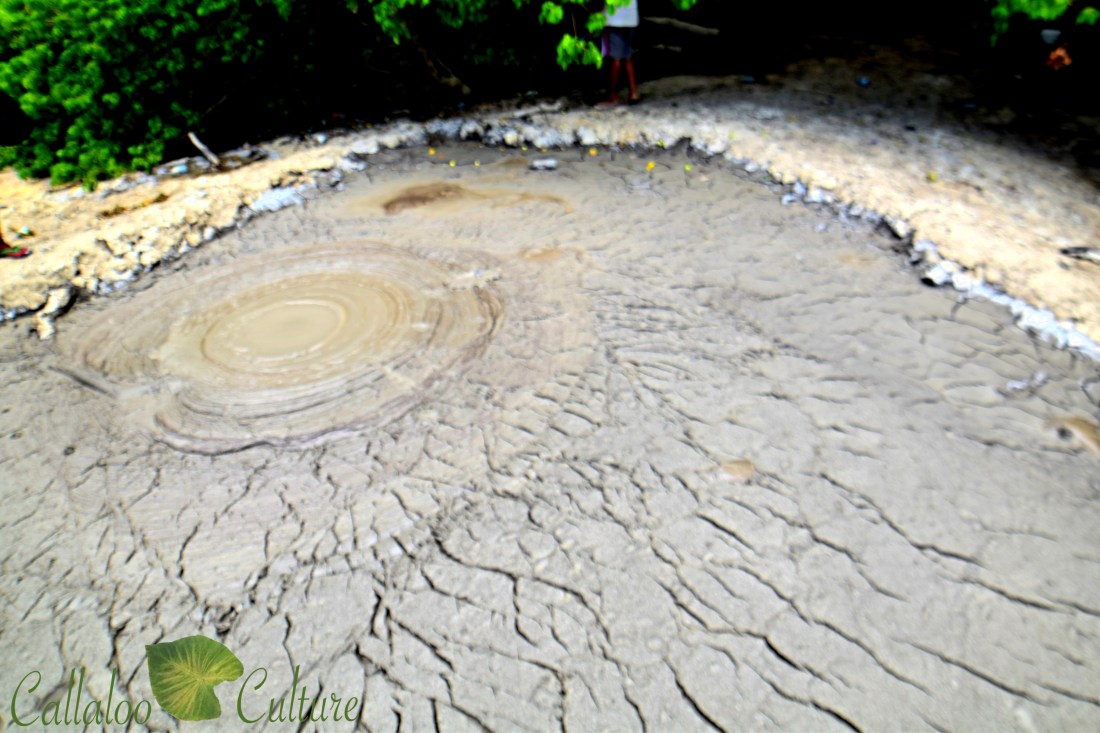
Besides Princess Town and Piparo, there are mud volcanoes, in Penal “Leau Michael” and Los Iros. These volcanoes are often visited by tourist and local groups.
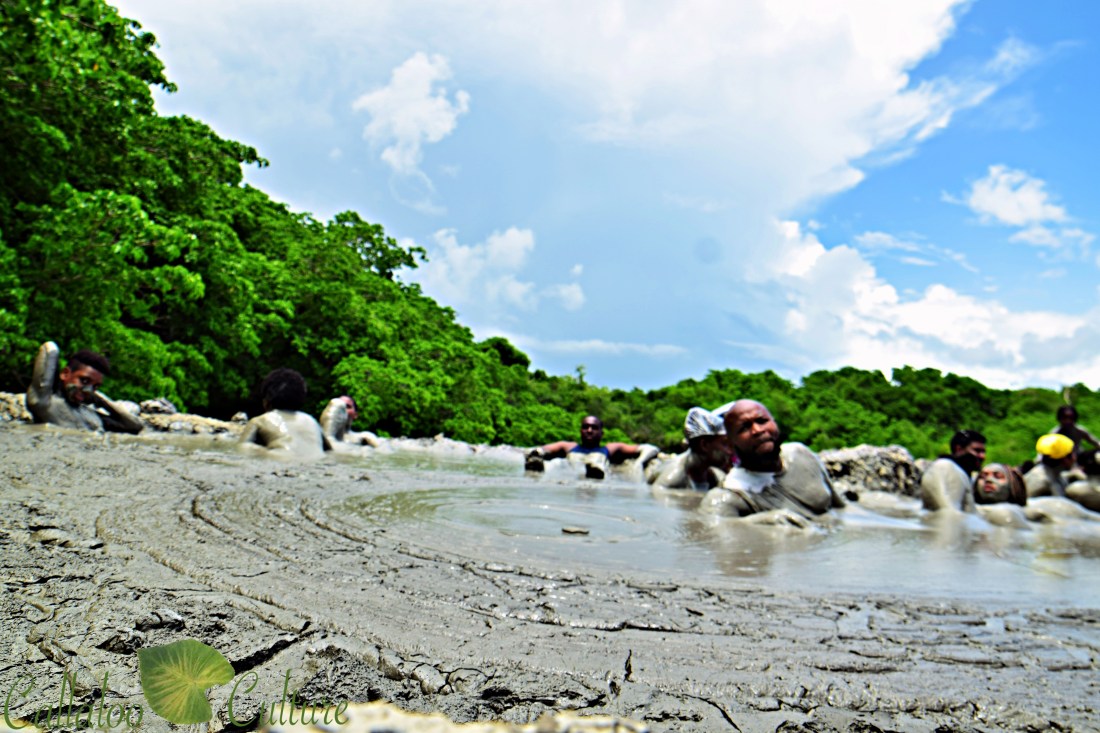
Now, I did not enter the volcano, mainly because there is no supply of fresh water around to wash the mud off of your skin. In order to get clean you would have to make the trek down the hill to get to the sea. This is a thirty minute walk, in the scorching sun no shade, with dry mud on your skin, I was not about that life. Based on my observations of the persons who decided to indulge, the mud appeared to be cool. It also appeared that the mud assisted with buoyancy.
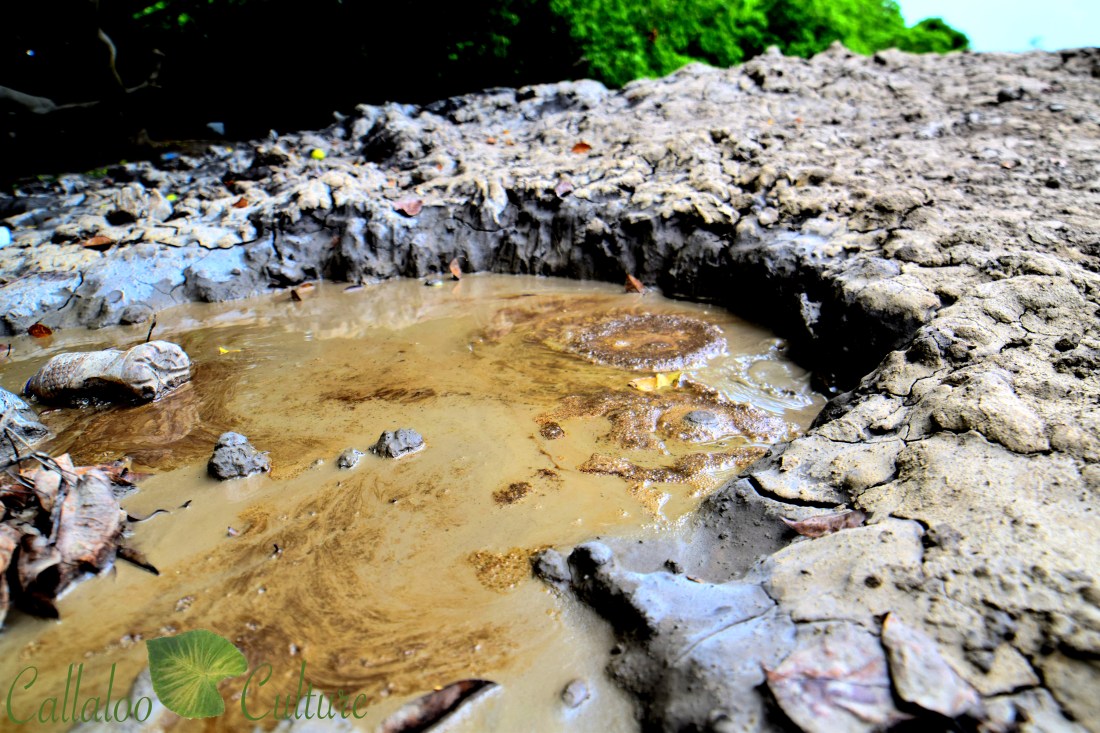
I did however get my hand dirty as I scooped up some of the mud to inspect. The mud has a very silky consistency, it’s almost like you are touching premium soft serve ice cream. It’s that smooth. The smell however….. You know that tin of oil paint that your grandmother purchased like five Christmases ago and she is trying to convince you that the paint is still good, but your nose and your upset gut tells you that it’s not? Yea, that’s the best description of the smell that emits from the mud. I’m guessing that the sulfur and various gases can be blamed for that?
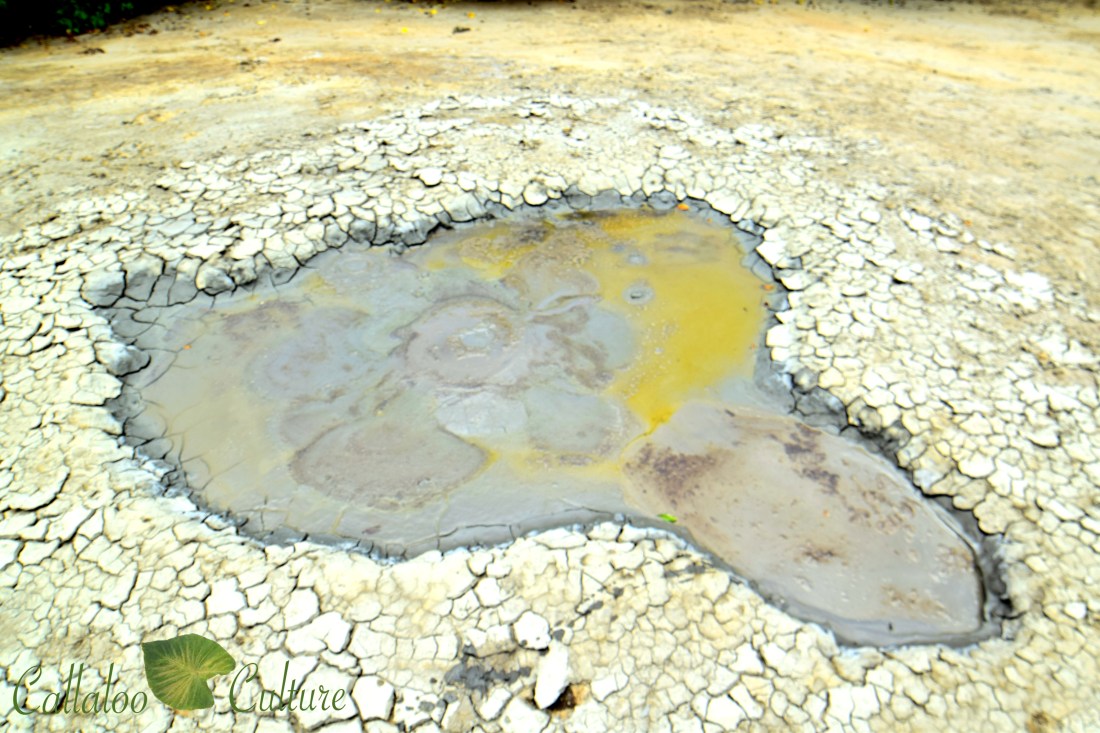
What I did not mention before was, when you exit the forest and you get to the clearing with the volcano you are actually entering from the top. If you take a walk down the side of the volcano, there are smaller mud pools within close range.
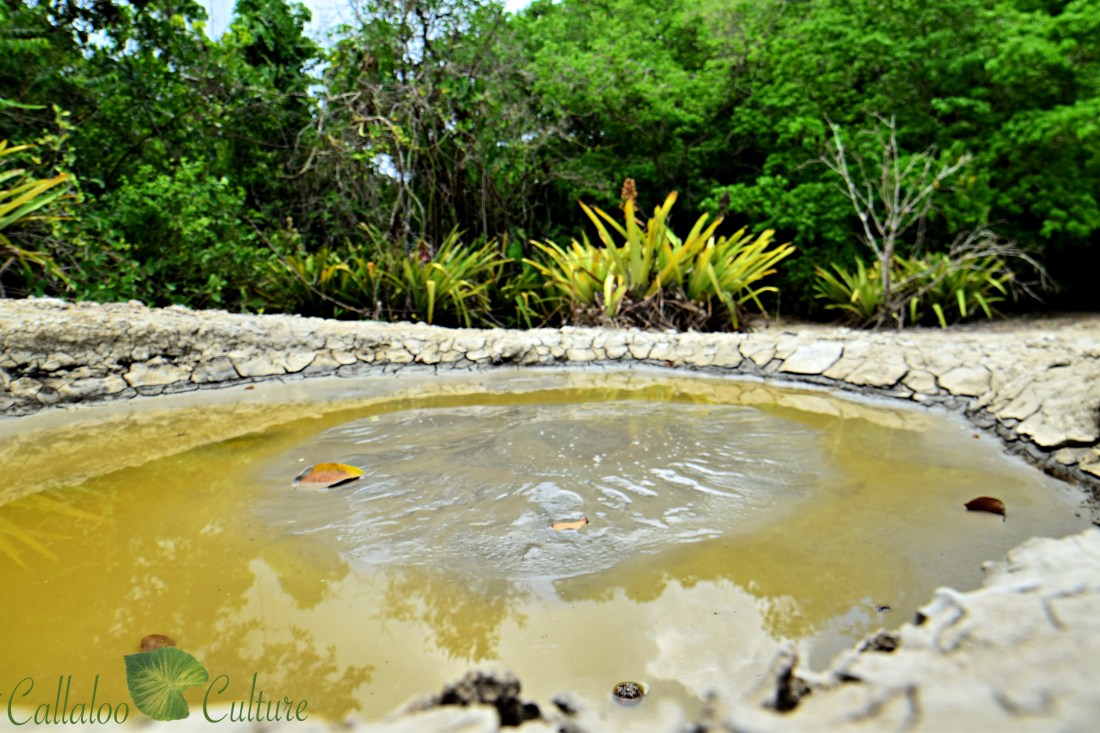
All in all I would say, this was an awesome experience. As a child I was always fascinated with volcanoes. My dream is to see an active lava volcano from a safe distance of course. Until I could actually make that dream a reality, seeing bubbling of the mud volcano was satisfying enough for now. I would encourage others to go see this natural wonder especially the natives. This is literally in your back yard!
A few things to note.
I’m not saying that this is not a safe location, but it is in the middle of nowhere, if you are going to make the journey, go in groups.
Secondly, if you plan to take a dip in the mud either you come with your fresh water to wash off, or go with enough garbage bags to wrap yourself or your car seats with.
Blessings!
Callaloo Culture
References
Figure 2f from: Irimia R, Gottschling M (2016) Taxonomic revision of Rochefortia Sw. (Ehretiaceae, Boraginales). Biodiversity Data Journal 4: e7720. https://doi.org/10.3897/BDJ.4.e7720. (n.d.). doi: 10.3897/bdj.4.e7720.figure2f
Categories: Uncategorized
 callalooculture.com