

“Mamie look they coming back” shrieked a little girl behind me as she clutched her mothers’ legs tightly. “Don’t worry” her mother said trying to reassure her “you just stand right here and they cannot do you anything”. What was reason for this little ones’ fear you ask, those menacing Blue Devils. Jab Molassi (also known as molasses devils) are famous for inciting fear into the minds of spectating children and adults. From their blue covered skin and red frothy lips, to the spine chilling screeches they let out randomly to alert you to their existence or perhaps it’s their animated movements that depict demon like crawls. One thing is for certain nobody wants to get close to a Jab Molassi. NOBODY.
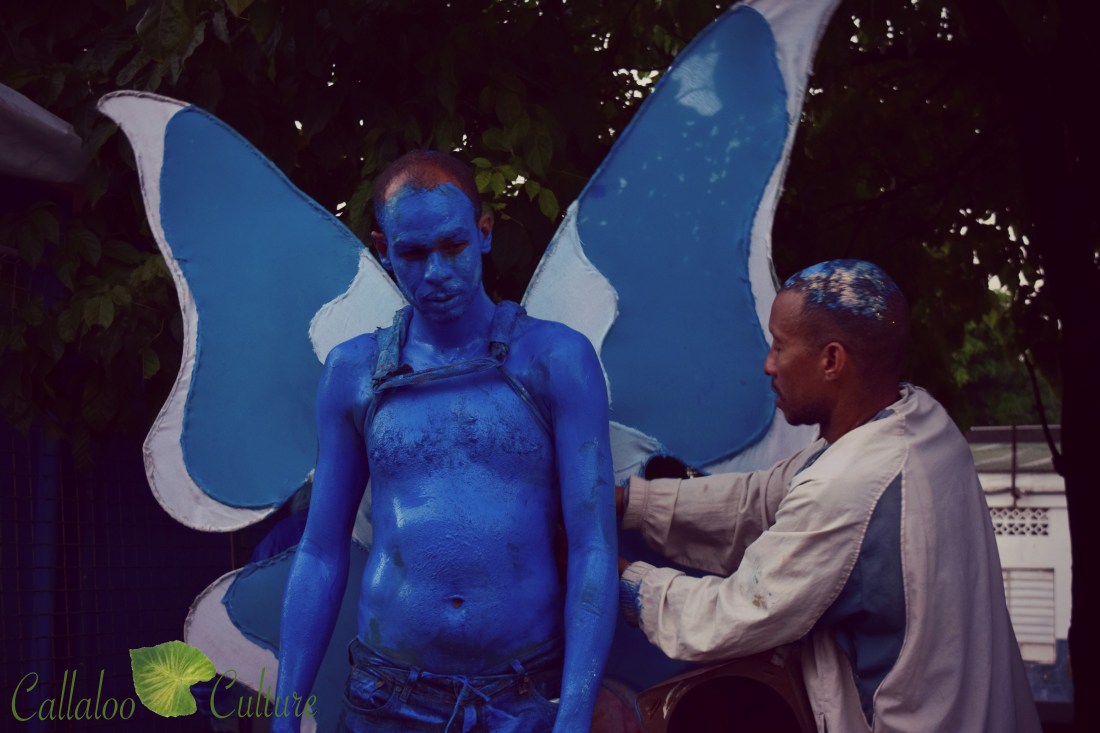
In my very first blog entitled while you were sleeping https://callalooculture.wordpress.com/2017/09/28/while-you-were-sleeping/ I spoke about the re-enactment of the Canboulay Riots that transpire every Carnival Friday on Piccadilly Street. At the end of the presentation, Piccadilly Street comes alive with a parade of traditional mass characters. The parade usually ends with the traditional character we usually like to observe from afar, the Blue Devils. This year I attended the celebrations specifically for these trouble makers. As the other characters completed their parade down the street the public anxiously awaited the arrival of the Blue Devils. As they assembled on the pavement towards the end of the street I stood in the midst of them observing. One bucket filled with blue paint was provided by the one of coordinators of the group. They each took their time smearing the paint on their faces, neck then proceeding to cover the rest of their bodies. Once they were covered with paint they each took turns smearing red goo on their tongues and lips. When this transformation was completed, the group proceed to dress themselves in their costumes; some wore wings, while others dressed in hooded robes and jackets. Those who opted to stay bare back wore tattered shorts with devil tails attached accompanied by horns and pitch forks. They were now ready for action it was show time.
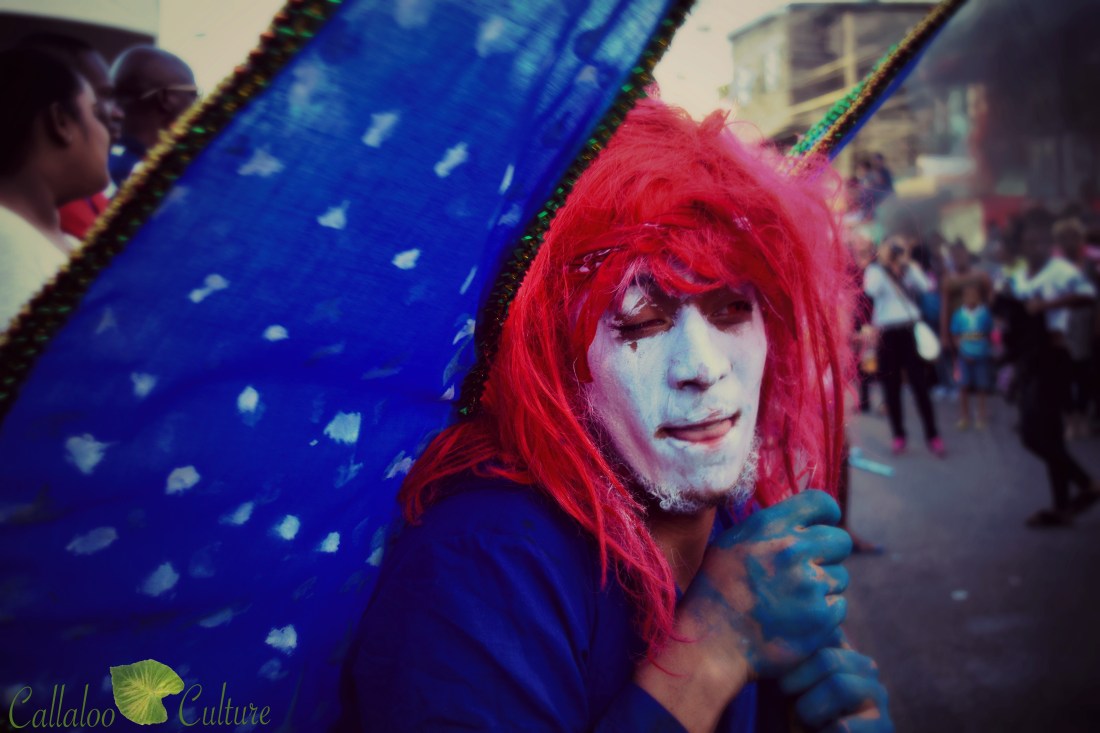
As they cracked a scream at the top of their lungs in unison, a sign that they were now on the move, women, and children and yes some men scampered out of their way in fear of being covered in blue paint. Not me, I was literally in the heat of the action. If it’s two things I have learnt when dealing with the Blue Devils it’s this, is either you come with lose change “To pay the Devil” which would assure that they won’t dirty your clothing. The next tip is you show absolutely not fear, which is what I did this year, they will ignore you and move on to the next squirming spectator. The smell of paint and kerosene filled the air and my lungs as the Blue Devils filled their mouths with the flammable liquid and spew it out at the flambeaus in their hands creating clouds of fire.

Although I was at a safe distance at this point, I was close enough to feel the heat of the fire against my face in the cool morning air. It was quite exhilarating I must say. As they made their way down Piccadilly Street they continued to harass spectators coming too close for comfort for some. Although some members of the public were running for cover they seem to like the excitement that the Blue Devils bring. To me it seemed like a love hate relationship between the two which was quite amusing to watch.

Like all Trinbago traditional carnival characters there is a story behind the origins of the Blue Devils. No accurate date can be connected the appearance of the Blue Devils, but the character can be traced back to the period of World War One. Jab Molassi bands have said to appear in regions throughout Trinidad such as Point Fortin, Arima and Paramin. In the 1930’s the Blue Devils in Paramin used instruments carved from bamboo known as “Tamboo Bamboo” They would also beat biscuit tins that were tempered with fire to give them a higher pitch

Recognized as the most vibrant and energetic traditional character the Blue Devils are distinctively identified as they paint their skin and clothing blue. This is often accompanied by blood and guts on their tongue with their pitch forks in tow. Those animated demon like moves I spoke about previously are actually choreograph moves which involves hooking the foot to walk together while simultaneously moving the head and shoulders. You would always know when a Blue Devil band is on the move as their high pitch screams in sync with the beating of their biscuit tins will be heard before you actually see them. The Blue Devil parade is typically lead by a King Devil who often demands cash from bystanders “pay de devil”. The King Devil is controlled by and imp who uses a leash to restrain the aggressive king.
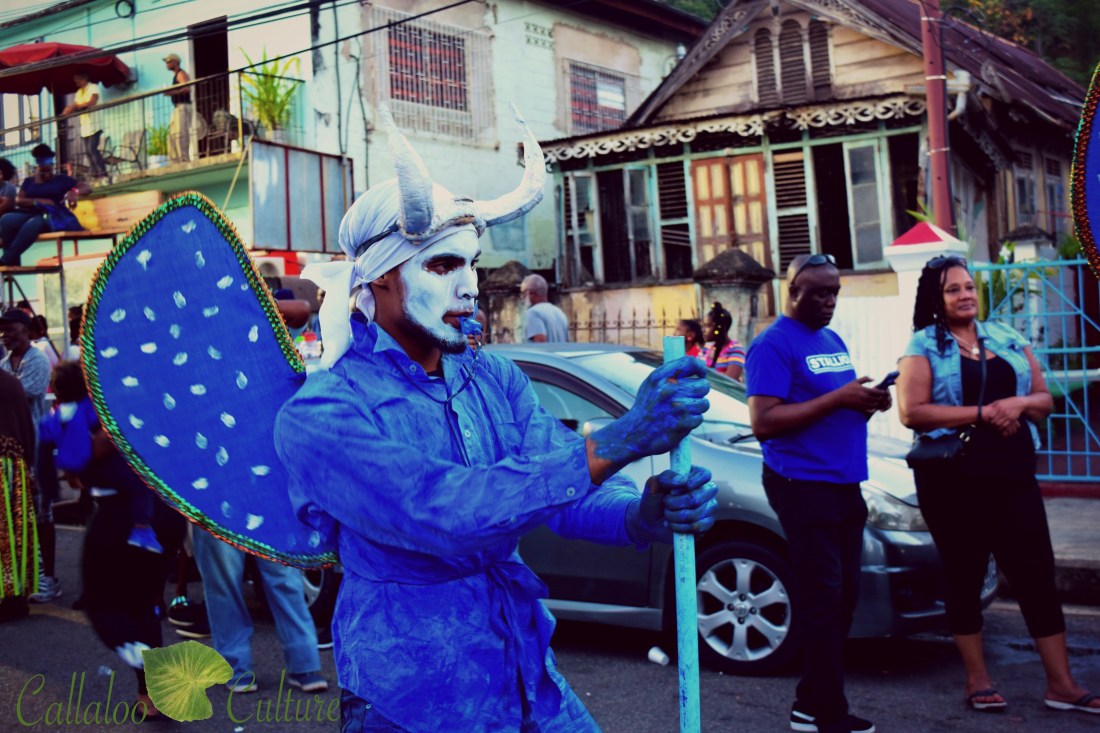
To be a blue devil requires no formal training as the art is passed down generation to generation. These bands are usually community base so children get involved and learn traditional steps at an early age.
The best Blue Devil can incite a feeling of fear without actually touching an onlooker by getting to close for comfort. They are also famous for relieving food items from observers and vendors when they are on the prowl.
If you happen to attend any cultural shows where the Blue Devils are on the lose don’t run, just make sure you have your resting bitch face in place or have your small change to “pay the devil”
Blessings
Callaloo Culture
Works Cited
(n.d.). Retrieved February 20, 2018, from http://www.diablosfestivos.org/diablos/index.php/diablosprofiles/bluedevils/
Categories: Uncategorized
 callalooculture.com