

This blog is dedicated to those three morning show host on a frequency that shall not be named, who had no clue what a water trough was.
I listen to Slam almost every morning Jason, Miles and Blaze usually give me the vibe I need to make it through the day. On this particularly odd morning the radio was tuned into another frequency. These three champions were arguing about the structure which is located on the pavement of the Eastern Main Road, Laventille (outside of the Success Laventille Secondary School). One insisted that it was a fountain the other two contended that the structure was a statue. “HOW?” I shouted to three people who obviously could not hear me. “It’s a water trough!” It does not look like a fountain, by no definition. And it certainly does not look like a statue. It looks exactly like what it is, clearly these people have never looked at a western movie in their lives.
Before I send up my blood pressure I have to remember, these are not things the general public would go out of their way to investigate, unless you are interested in our history or you are truly observant. So in this blog I would point out some of the historical artifacts that are in and around Port of Spain that you most like walk/ drive by every day without even noticing.
- Water trough
Location – Eastern Main Road (Outside Success Laventille School)
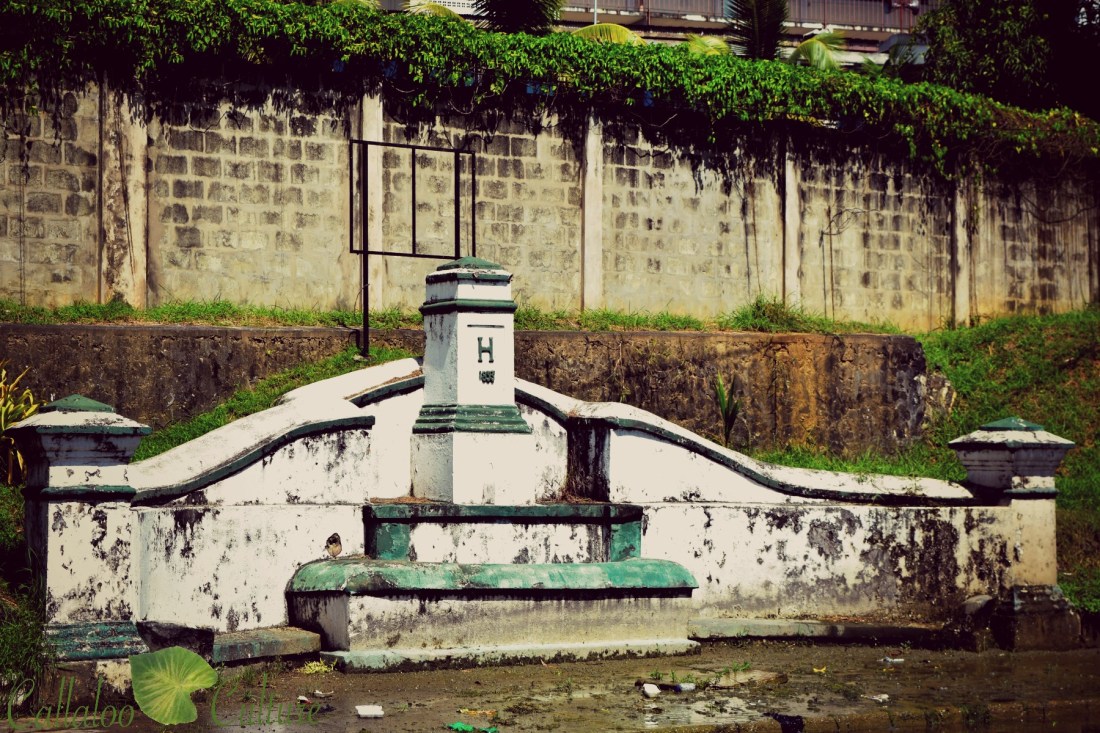
Imagine Trinidad in 1853, slavery has been abolished nineteen years before in 1834 and the Africans are free to roam the island, earn income and live as they please. The automobile had not been invented so dirt roads and donkey carts or horses were the primary method of transportation. If a merchant wished to transport his goods from St Joseph to Port of Spain, he would have to make the journey along the dusty roads in the smoldering heat. Like humans, animals, especially those who are used for labour require frequent hydration. A water trough such as the one strategically located outside of the capital would allow owners of horses, donkeys or any other life stock to hydrate their animals so that they do not perish in the heat. Not much information is available on the internet about our water trough that is still intact, other than it was built in 1853 (Gittens, 2013) Today our water trough sits sad and dreary on the Eastern Main Road. The area is in desperate need of cleaning and the trough requires of several coats of paint. At one point a homeless man lived in the trough which left the national treasure even less desirable. Perhaps the powers that be should give this site a face lift, and erect a sign that clearly state what the structure is and its former purpose, maybe then it would not be mistaken for a statue or a fountain.
2. Horse Rings
Location – ANSA McAL building, Abercromby Street, Pot of Spain
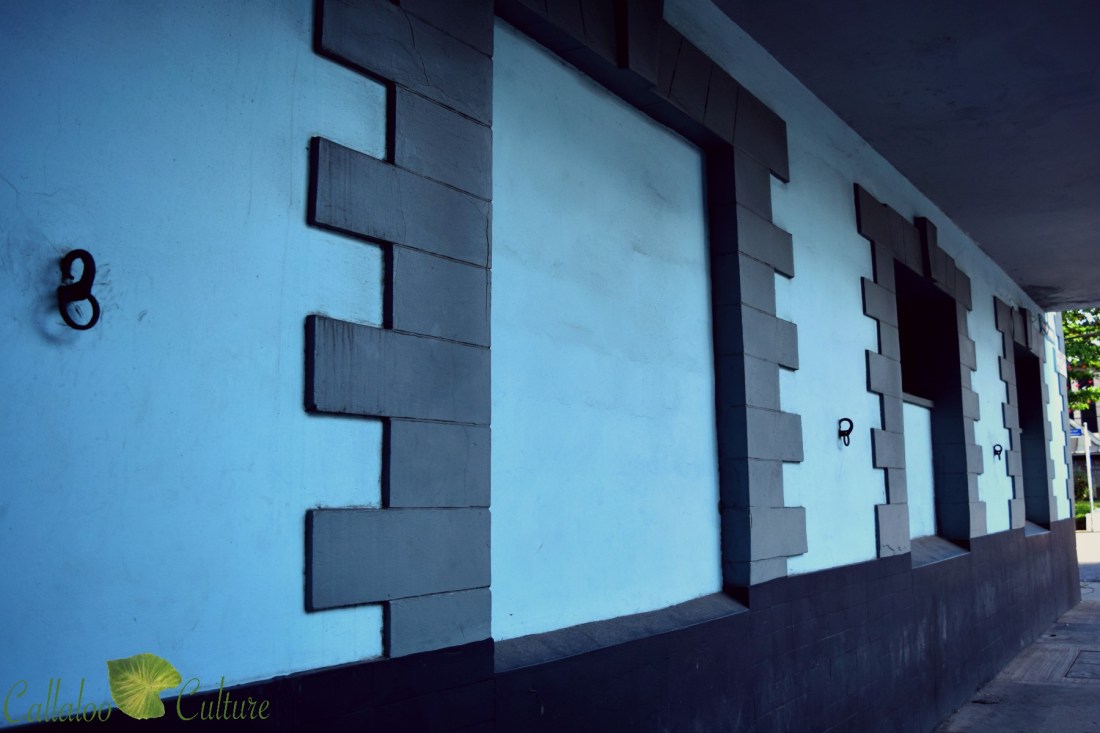
If those walls could talk I am positive, that they will have a lot to say!
Installed are three horse rings, there may have been more than three at one point but these are what remain. In 1850 till the 1930’s the way to get around Port of Spain was by horse drawn cabs can you imagine that? This service was initially restricted to private owners/operators who took great pride in their appearance. Top hats and frock coats were the standard attire of the drivers. This all changed in the 1880’s when members of the public could seek transportation from these horse drawn cabs. Fixed rates and penalties were administered by the Trinidad Constabulary. Cab stands were located on Marine (Independence) Square, where signboards listing the distances and fares were clearly stated. 1800 – 1920 was the prime of coach works and livery stables, the largest belonging to J Haynes Clark. Liveries were located on Abercromby Street and Fredrick Street (Real horse power the way to get around, 2012).
3. Railway Engine
Location – Port of Spain Museum – South Quay
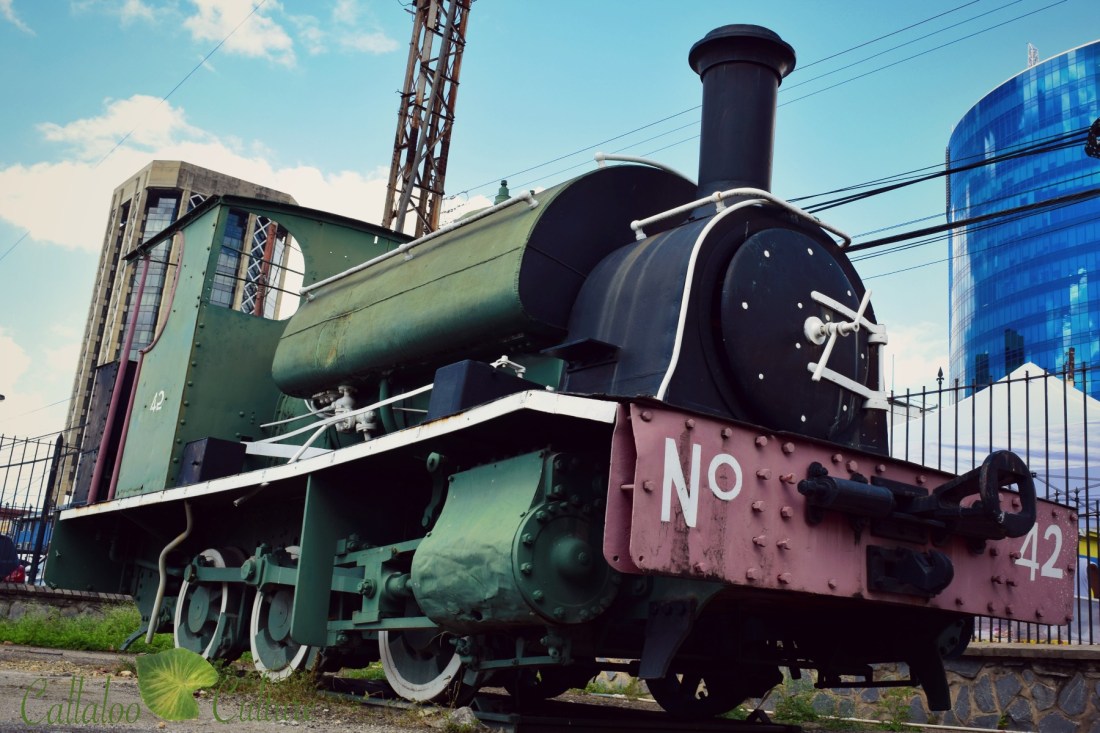
If your daily commute allows you to pass along South Quay, in front of the Port of Spain Museum, I am sure you must have noticed the railway engine. It is very hard to miss! In 1879 the Port of Spain Railway Station was a group of long wooden structures. In 1924 the present building was completed which we know as “City Gate”. From commencement to the abandonment of the railway in 1968, the railway station served as the main entrance and exit to the city. This railway linked Port of Spain with stations along the east- west corridor which included San Juan, Tunapuna and Arima. South, San Fernando. Princess Town and Rio Claro were also linked the Port of Spain station. (Railway Engine, 2016)
4 Humphrey Film Vault
Location – Charles Street and Wrightson Road, Port of Spain
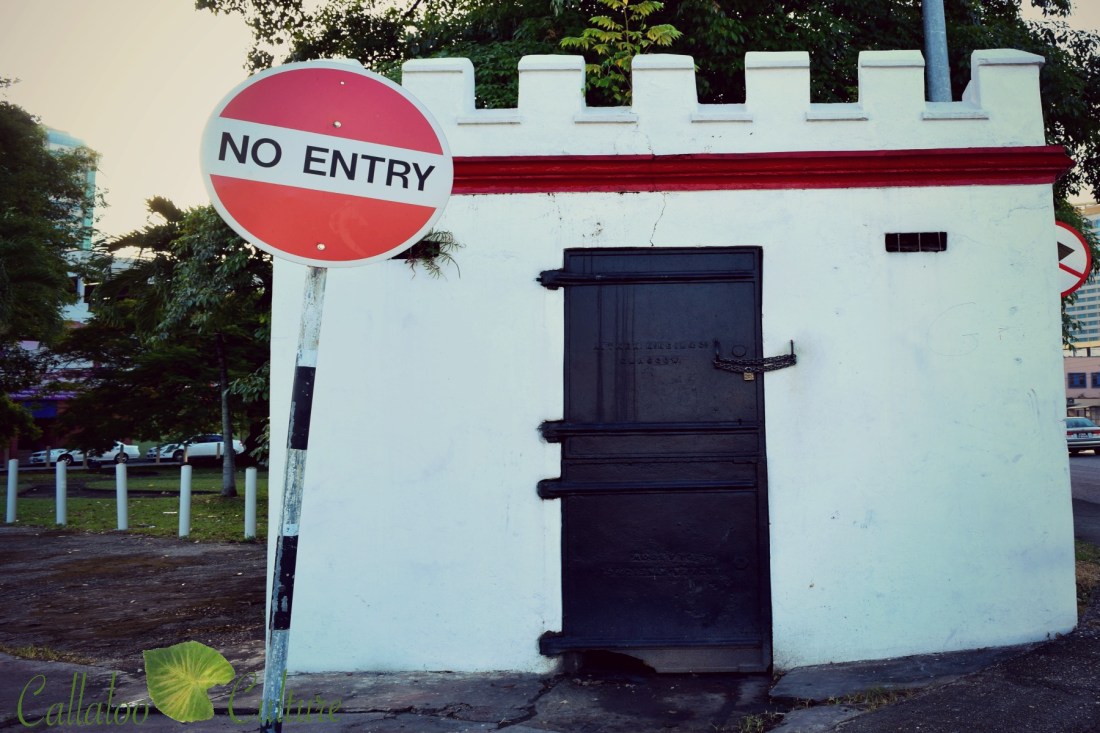
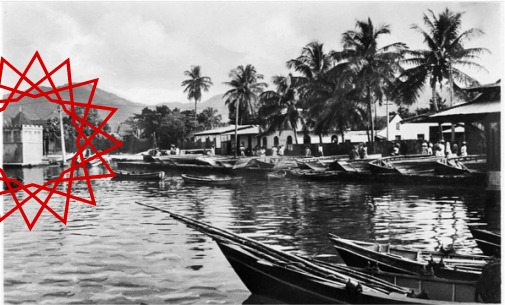
In my younger days I would pass this building on Wrightson Road opposite the fire station resembling a box and wonder what it was. It was not until my teenage days when I asked my cousin tour guide extraordinaire Analica Boyce – Hall, what the mysterious “box” was she told me that it was used to store films. In the 1920s a small concrete storage bin looking like a medieval keep was erected at the water’s edge. This belonged to William Pettigrew Humphrey, a pioneer in local cinema. The celluloid film reels that were used in those days were highly flammable. Because Port of Spain was frequently under the threat of fire, having been completely burnt in 1808 and 1895, the constabulary mandated that Humphrey store his films outside the city limits instead of at his office on Broadway. (Bissessarsingh, 2013). I want you to bare in mind where this structure is before looking at the next picture. Also note that the structure was never moved
5. Water fountain
Location Woodford Square
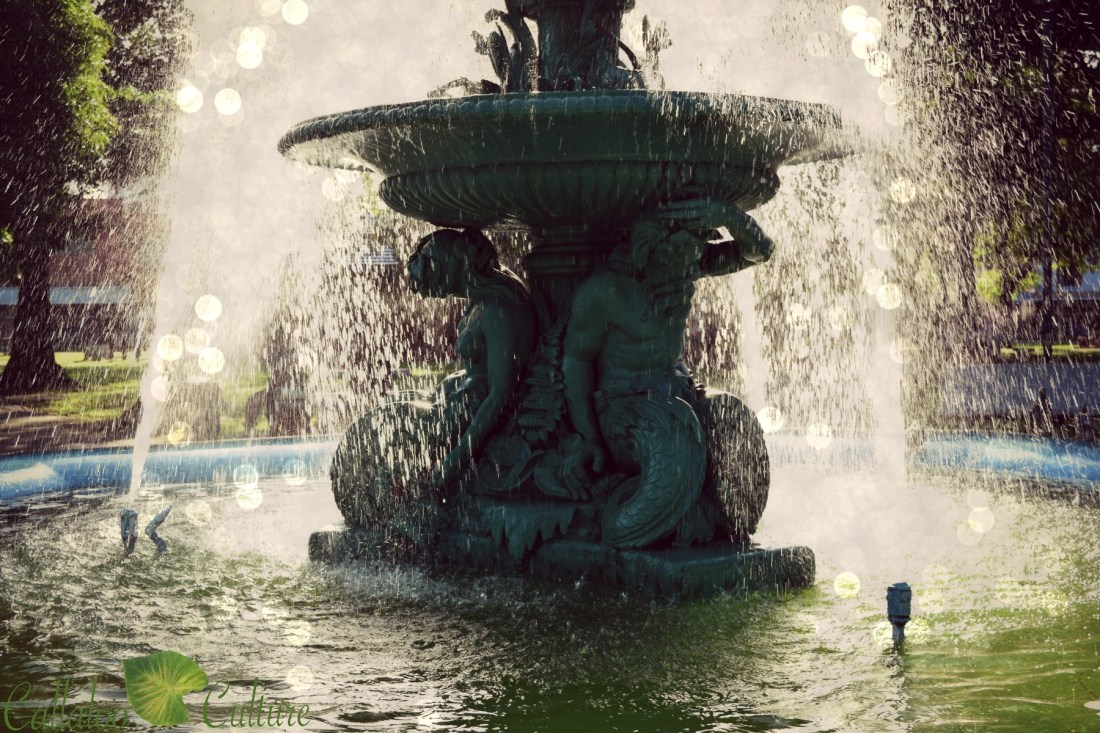
Woodford Square or “The University of Woodford Square” as it is referred to by some was established by Mayor Dr. E Prada in 1917. Sir Ralph James Woodford had significantly contributed to the landscape of Port of Spain, therefore the square was named in his honour. Woodford Square has been the meeting point for many public gatherings for example the 1903 Water Riots, PNM rallies lead by DR Eric Williams, and the Black Power Movement assemblies just to name a few. I don’t know about you, but every time I take a walk through Woodford Square, I feel a connection to the history it is almost like I could see Dr. Williams on a podium in front of him thousands of people hanging on his every word. Have you ever noticed the fountain? Sure you have most likely seen it, but have you even took a moment to really look at it? The fountain was donated by Gregor Turnbull (A Glasgow- Born Merchant) in 1866. Its original location was on Marine (Independence) Square where the stature of A A Cipriani now stands. In 1896 it was moved to accommodate the tram line. The statue depicts the image of the Greek Goddess of love, sensuality and beauty Aphrodite holding her son Eros, the Greek God of sexual attraction. The second tier is made up of seaweeds and plants and the third portrays Tritons (mermaid and mermen with double tails) (Lovelace, 2017).
On your next Trip to Port of Spain please be sure to have a look at these sites. I guarantee it’s worth the 10-15 minutes. If there are any that I have missed, please contact me at avanelle.mboyce@outlook.com and I would be happy to add them.
Blessings
Callaloo Culture
Works Cited
Bissessarsingh, A. (2013, September 1). Recounting the Corbeaux Town Days . Retrieved from Angelo Bissessarsingh : http://bissessarsingh2.rssing.com/chan-13373939/all_p2.html#item31
Gittens, B. (2013, Aug 28). When Steel Talks . Retrieved from When Steel Talks : http://whensteeltalks.ning.com/photo/e-m-r-laventille-horse-trough-1853
Lovelace, T. C. (2017, June 5th ). 100 Years of Woodford Square . Retrieved from The National Trust of Trinidad and Tobago : http://nationaltrust.tt/100-years-woodford-square/
Railway Engine. (2016, January 14). Retrieved from The National Trust of Trinidad and Tobago : Ra18nationaltrust.tt/location/railway-engine/
Real horse power the way to get around. (2012, August 5). Retrieved from Trinidad and Tobago Guardian : http://www2.guardian.co.tt/news/2012-08-05/real-horse-power-way-get-around
Categories: Uncategorized
 callalooculture.com